Nov. 25, 2025 – Recent weeks have witnessed breakthroughs at the intersection of artificial intelligence (AI) and aerospace, reshaping humanity’s exploration of the cosmos and the future of computing.
Germany’s AI: First Autonomous Satellite Controller
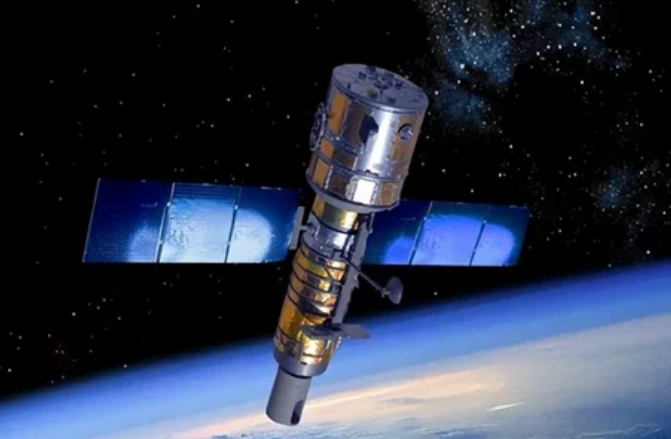
A German research team achieved a historic milestone by deploying the first AI-powered autonomous satellite attitude controller, according to a Nov. 12 announcement. The system, mounted on the InnoCube nanosatellite, completed a precise 9-minute attitude adjustment on Oct. 30 without ground intervention. Leveraging deep reinforcement learning (DRL), the AI self-optimized control strategies through simulations, eliminating months of manual calibration. “This solves the gap between lab training and space application,” noted project leader Dr. Kirill Jebko, adding the tech could revolutionize deep-space missions where communication delays hinder human control.
Elon Musk’s bold plan: Orbital AI data centers
Elon Musk has amplified the AI-in-space trend with a bold proposal unveiled Nov. 19. The SpaceX and xAI CEO aims to deploy orbital AI data centers, predicting space-based computing will be cheaper than terrestrial alternatives within 4-5 years. Powered by unlimited solar energy and natural radiative cooling, his plan targets deploying 100 gigawatts of orbital computing capacity annually – equivalent to a quarter of U.S. total electricity generation. While Nvidia CEO Jensen Huang called it a “dream”, Google has already joined the race with its “Sun Catcher Initiative”, planning to launch AI-equipped satellites by 2027.
China’s Tiangong: Mice pave way for deep-space missions
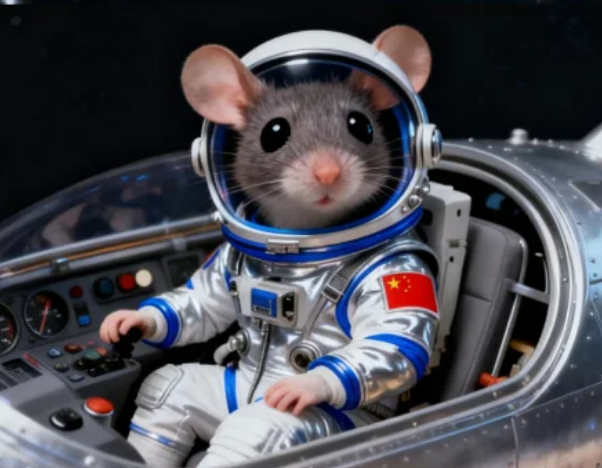
China’s space program meanwhile advanced life science research with its first in-orbit mouse experiment. Four specially trained mice arrived at the Tiangong Space Station via the Shenzhou-21 spacecraft on Nov. 1. Selected for their 85% genetic similarity to humans, the mice undergo behavioral monitoring to study space stress responses. “This builds a full-process experimental system for mammalian space research,” said researcher Li Tianda, laying groundwork for future long-duration missions.
From autonomous satellites to orbital data centers, these developments signal a new era where AI and aerospace converge to overcome earthly limitations.