
According to a report on January 31th by the US-based PC Magazine website, Space Exploration Technologies Corp. SpaceX has applied to launch up to one million satellites to establish an orbital data center network encircling the Earth. The company has submitted an application to the US Federal Communications Commission (FCC), describing the project as “a satellite constellation with unprecedented computing power to support advanced artificial intelligence (AI) models and their related applications”. One million! This scale far exceeds the company’s existing Starlink constellation. What are SpaceX’s intentions with this application? If approved, what impact would it have? And how should China respond? Li Hongbo from China Aerospace Science and Technology Corporation (CASC) offers an interpretation.
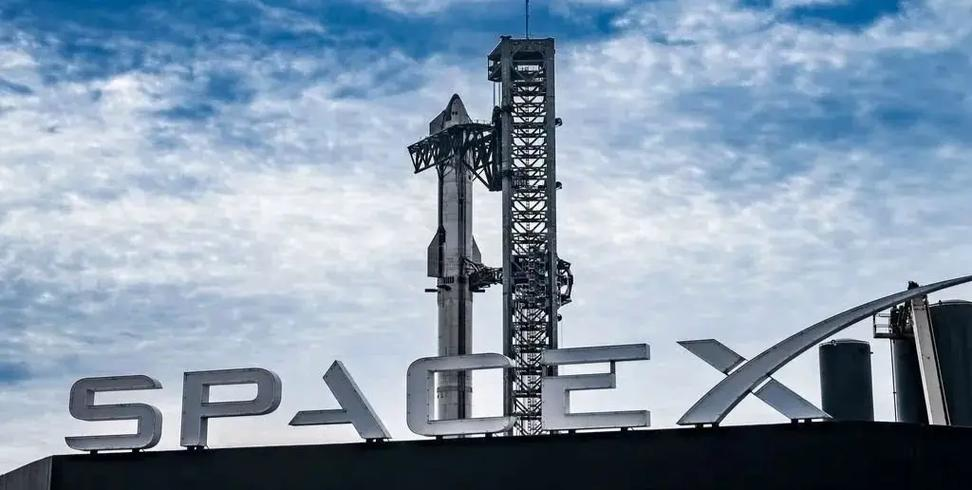
First, it’s important to note that SpaceX has submitted this application for launching and operating a one-million-satellite constellation system to the US Federal Communications Commission (FCC). That is to say, the submission is to a domestic US regulatory body. Li Hongbo explained that according to the process, after SpaceX submits the application, the FCC must publicize the information, which is akin to soliciting opinions from the industry. If other companies object, coordination must be carried out within the FCC’s framework, with the FCC ultimately deciding whether to grant SpaceX authorization.
In Li Hongbo’s view, this application is, on one hand, SpaceX’s move to preemptively secure the allocation of frequency and orbital resources within the US market. This could be seen as initiating a new round of “land grab” competition within the American space sector.
Simultaneously, she analyzed that SpaceX is expected to face a cash flow gap of $30 to $50 billion in the coming years and is therefore preparing for an initial public offering (IPO). To secure sufficient financing, the company is currently sending out messages aiming to push its valuation up to $1.5 trillion. However, with its current annual revenue only in the tens of billions of dollars, it clearly cannot support such a high valuation, hence it must raise expectations. Submitting the application for a mega-constellation at this point in time is an attempt to bundle AI with space, leveraging the combination of these two hot concepts to hype up its valuation scale.
“With SpaceX’s current manufacturing and launch capabilities, deploying one million satellites is clearly unrealistic,” Li Hongbo believes. This type of application, which appears detached from actual engineering capabilities and needs, is primarily aimed at supporting the company’s current financial operations or even speculation. Li Hongbo stated that apart from domestic US authorization, SpaceX would also need to submit applications for orbital and frequency resources to the International Telecommunication Union (ITU) either directly through the US government or via other countries to obtain international authorization. The company’s Starlink satellites have previously submitted international resource applications through countries like Norway and Tonga. China’s own application to the ITU for 203,000 satellites is for international resource allocation.
Li Hongbo said that if SpaceX begins pushing for international applications, it would intensify the situation where countries are stockpiling frequency and orbital slot resources. If the figure of 42,000 satellites for the Starlink plan was once astonishing, things became bizarre when Rwanda submitted an application to the ITU for 327,000 satellites in 2021. By 2023, the number of satellites applied for by various countries at the ITU had exceeded one million.
“In this scenario, what suffers the most impact is actually the ITU’s international coordination and allocation mechanism,” Li Hongbo said. “When everyone starts submitting massive applications, one million, ten million – there’s no fundamental difference anymore. It will only cause the ITU’s international coordination and allocation mechanism to collapse.” Li Hongbo indicated that if SpaceX obtains FCC authorization, it could squeeze its competitors in the US market. For China’s space sector, at this stage, the application has no direct impact, as the US market was never open to China’s space industry in the first place.
“Our current space hardware capabilities are second globally, and in some areas, we have caught up with or even surpassed the US. Our technological foundation is quite solid,” Li Hongbo believes. In the face of these ambiguous situations, on one hand, we need to closely monitor the situation and changes in the international coordination and allocation mechanism for frequency and orbital resources, and use the rules effectively according to our own needs. On the other hand, we must also respect objective reality, act within our capabilities, and focus on doing our own work well. “China’s space program has always been like this, planning its development path according to its own national conditions and controlling its own development pace,” she said.