
As macroeconomic data outlines the trajectory of steady economic growth, a series of fascinating new phenomena have emerged in the consumer market: Yiwu’s “Crying Horse” plush toys went viral overnight, Starbucks’ Harry Potter collaboration opened in century-old historic buildings, and young people are spending over 2 trillion yuan on “emotional value”. These seemingly “non-mainstream” consumption scenarios have become the most vivid manifestations of China’s economic growth in 2026.
Quirky products counterattack! “Crying horse” takes the world by storm, empowered by China’s flexible manufacturing
Who would have thought that a plush toy with drooping ears and watery eyes would become the “top trend” of early 2026? The latest data from Yiwu Small Commodity Market shows that since the “Crying Horse” emotional doll went viral in January, domestic and overseas orders have surged by 300%. It has not only topped domestic trending charts but also been shipped to more than 20 countries worldwide via cross-border e-commerce, with monthly sales exceeding 120 million yuan.

Behind this is the “flexible magic” of Chinese manufacturing – from netizens posting photos that sparked heated discussions, to factories rapidly creating samples, adjusting production lines, and delivering bulk orders in just 72 hours, perfectly meeting the instant demand for “emotional consumption” among Generation Z. According to iiMedia Research, the scale of China’s emotional consumption market is expected to reach 2.72 trillion yuan in 2026 and surpass 4.50 trillion yuan by 2029, with anxiety relief, self-comfort, and social recognition as the three core consumption motivations. Beyond “Crying Horse”, stress-relief squishy stationery, pillows printed with “Slacking Off Is Innocent”, and healing scented candles have all maintained a year-on-year growth rate of over 50% on e-commerce platforms.
Stores turn into “amusement parks”! Brands rush to create immersive consumption spaces
The traditional model of selling goods is becoming obsolete, as offline stores transform into “social check-in spots” for young people. Since 2026, brands have been competing to enhance immersive experiences, upgrading consumption from “buying products” to “enjoying life”.
OPPO | OnePlus flagship stores opened simultaneously in Zhengzhou and Xi’an, integrating elements such as two-dimensional culture, games, and photography. Equipped with e-sports battle zones and trendy photo walls, they even offer urban culture-themed activities, becoming a new weekend gathering choice for young people. This drove offline sales up by 23% month-on-month and helped OPPO achieve a 10.2% countercyclical growth in the fourth quarter of 2025.
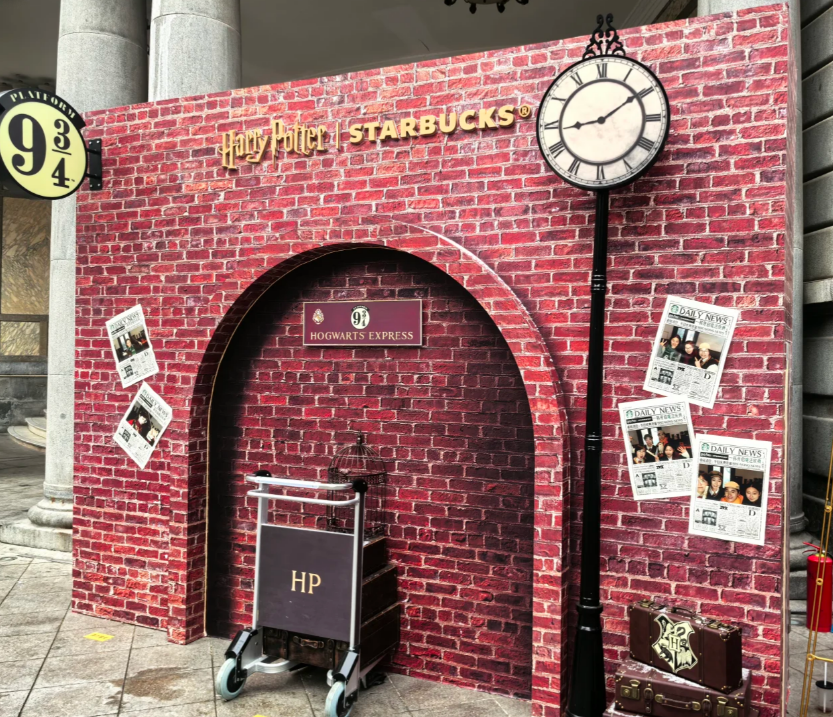
Starbucks collaborated with Harry Potter to launch themed events in its century-old European-style buildings in Shamian (Guangzhou) and Henglong Plaza (Tianjin). Consumers can participate in magical interactions and check in at retro scenes, boosting store foot traffic by 40%.
Nike is promoting global store upgrades to build “community + retail + culture” complexes, providing customized services around sports scenarios. These stores have become offline hubs for running groups and sports training, transcending the mere function of commodity transactions.
Policy + demand dual-driven: Four major consumption booms light up the domestic demand market
Driven by both macro policy support and upgraded consumer demand, the 2026 consumer market has witnessed four major booms, emerging as an “invisible engine” for economic growth:
Upgraded tourism boom: The longest Spring Festival holiday in history sparked a travel frenzy. During the first week of the Spring Festival travel rush, the average daily number of travelers exceeded 200 million. Booking volume for Spring Festival travel services on Fliggy increased by 30% year-on-year, while high-star hotel bookings surged by 70%. Intangible cultural heritage tours and ice-snow tourism have become new favorites – search interest in “ICH-themed” travel rose by 85% month-on-month during the New Year holiday, and the foot traffic at local ski resorts in Guangzhou and Shenzhen was comparable to that in Harbin.
Booming cultural consumption: New Year’s Eve concerts, online novels, short dramas, and podcasts have become popular among young people. Among the 40 New Year’s Eve concerts held nationwide on December 31th, 2025, a total of 16 venues were located in the Guangdong-Hong Kong-Macao Greater Bay Area, with combined box office revenue surpassing 800 million yuan. The number of online novel users surpassed 520 million, and the daily active users of short dramas exceeded 180 million, spawning new profit models such as “pay-per-view” and “IP derivatives”.
Accelerated green consumption: Policy subsidies have driven strong sales of green home appliances and new energy vehicles. In 2025, NEVs accounted for nearly 60% of car trade-ins. Foreign automakers such as BMW are accelerating their transformation, slashing prices of electric vehicles to seize market share. Home appliance enterprises have launched full-industry-chain low-carbon products, with energy-efficient Class 1 appliances accounting for over 65% of sales.
“Guangdong goods” going global with policy tailwinds: The policy of trade-in for consumer goods has been extended, benefiting key sectors such as automobiles, home appliances, and digital products. Leveraging its industrial advantages, Guangdong has promoted “Guangdong Goods” to the global market through cross-border e-commerce comprehensive pilot zones. In January 2026, Guangdong’s cross-border e-commerce export volume increased by 18% year-on-year, and the brand influence of “Made in China” continues to expand.

Innovative foreign trade + foreign investment: Overseas service platform simplifies “going global”
Beyond the vibrant consumer market, interesting new changes are also taking shape in foreign trade and investment. The Ministry of Commerce recently announced that a national-level comprehensive overseas service platform will soon be launched, integrating foreign affairs, legal, fiscal, taxation, logistics, and other resources to provide “one-stop” services for enterprises going global, addressing the pain points and difficulties faced by small and medium-sized enterprises in overseas expansion.
In terms of trade innovation, digital trade has become a new growth driver. The construction of national digital trade demonstration zones will start in 2026, promoting the digital transformation of service outsourcing. Exports of traditional advantageous services such as Chinese language education, traditional Chinese medicine, and Chinese cuisine continue to expand. Cross-border e-commerce has effectively empowered industrial clusters – Yiwu’s small commodities and Guangdong’s home appliances and digital products reach global consumers directly through cross-border e-commerce platforms. Despite the WTO predicting that global goods trade will grow by only 0.5% in 2026, China’s cross-border e-commerce export growth remains above 15%.
In terms of foreign investment, China has steadily expanded opening-up in sectors such as telecommunications, medical care, and education, ensuring that foreign-invested enterprises “not only gain market access but also can operate smoothly”. Foreign-invested enterprises not only participate in government procurement and bidding activities but also continue to increase investment in China’s consumer market. In January 2026 alone, three foreign retail enterprises announced the establishment of regional headquarters in China, optimistic about the potential of China’s super-large-scale market.