
While OpenAI across the ocean seems to have pressed the “pause button” on its AI video generation model Sora, Chinese tech giants are launching a counteroffensive in this field. Recently, ByteDance’s latest AI video generation model, Seedance 2.0, went online. With advantages like multimodal input, autonomous camera movement, and consistency, it quickly ignited the internet. After an in-depth experience, Feng Ji, founder of Game Science, offered a weighty judgment: “The content field is bound to witness unprecedented inflation.”
Feng Ji’s prophecy is not alarmist. This shockwave is rapidly transmitting to industries like e-commerce, gaming, video platforms, and film production. In e-commerce, the technical barriers for low-end outsourcing and photography studios have been completely flattened. In the gaming industry, the production cycles for proof-of-concept and user acquisition materials are being compressed to the limit, making competition even more brutal. Video platforms are forced to further optimize their distribution algorithms to cope with a surge in supply. Meanwhile, the traditional linear “filming + editing” process in film production is facing a dimensional reduction attack from the “prompt + generation” industrial pipeline.
A massive industry reshuffling concerning beneficiaries and replacements has already begun.
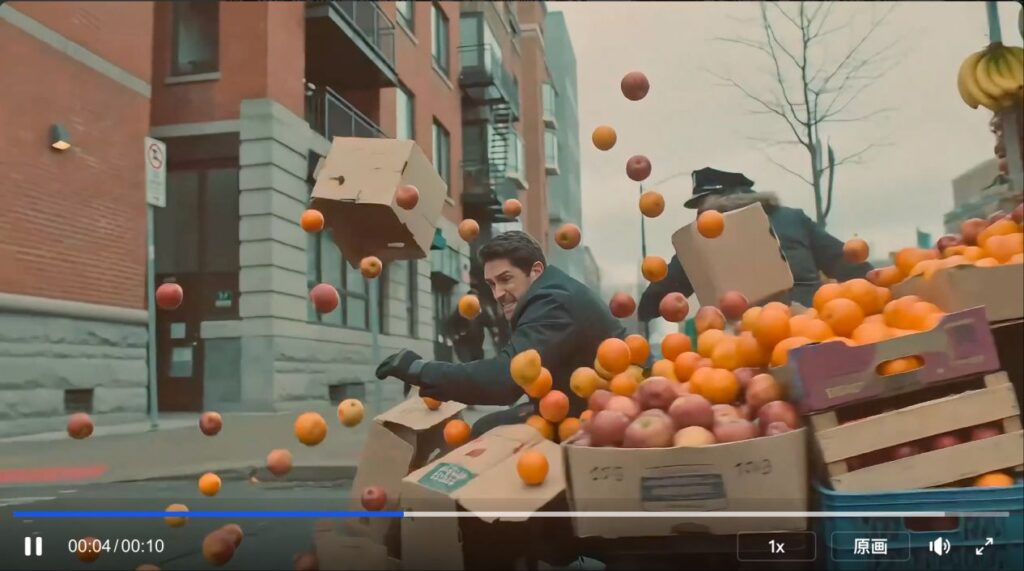
Over the past year, the biggest pain point for AI video has been deliverability. Whether it’s Sora, Runway, or domestic models like Kuaishou’s Kling or even ByteDance’s self-developed Dreamina, the same problem exists. Creators often find themselves trapped in a “gacha” game, needing to generate dozens of times to get a few seconds of non-glitchy, consistent video. The core breakthrough of Seedance 2.0 lies in its attempt to transform “technical prowess” into “deliverable narrative”. Key capability breakthroughs are mainly evident in three areas:
First, multimodal input. According to tests by All-Weather Tech, first-time registered users of Dreamina can directly use Seedance 2.0 for just 1 yuan with auto-renewal. It supports text, images, videos, and audio as reference materials for input – essentially any format you can think of can be used to generate videos. Second, understanding narrative and learning camera movement independently. Seedance 2.0 demonstrates “director-level” thinking. It can not only understand complex narrative logic but also automatically orchestrate cinematography, performing camera movements like pans, tilts, zooms, and tracking shots. Videos are no longer simple displacements of static images but possess a cinematic narrative logic. Third, visual consistency. Based on All-Weather Tech’s tests of various AI video generation applications on the market, problems like facial distortion during subject movement and backgrounds alternating between sharp and blurry are rampant. However, judging from demo videos, Seedance 2.0 maintains consistency in facial expressions, backgrounds, and other information during subject movement, making coherent narrative expression possible.
This means AI video generation is evolving from a toy to a tool. This ability to turn video generation into a standardized industrial pipeline makes the slogan “everyone is a director” no longer an empty promise, and it will significantly compress video production costs. Feng Ji uses “inflation” to describe this transformation. “The production cost of generic videos will no longer follow the traditional logic of the film and television industry. It will gradually approach the marginal cost of computing power. The content field is bound to witness unprecedented inflation, and traditional organizational structures and production workflows will be completely restructured. I believe anyone who has used it will quickly understand this prediction is far from alarmist.” Feng Ji stated.
When the marginal cost of video production approaches zero, business models built upon the old cost structures will be the first to bear the brunt. The e-commerce, gaming, video platform, and film production industries are likely the first wave to be affected. The most direct tremor is felt first in e-commerce. Product showcases, scenario enactments, and functional explanation videos essentially rely not on complex artistic narrative but on clear information delivery. With the proliferation of Seedance 2.0, the barrier for merchants to acquire video expression capability is completely flattened. Low-end video outsourcing companies and Taobao photography studios that previously survived on “information asymmetry” and “technical barriers” will face a winter. Video production may shift from professional outsourcing services to merchants’ daily in-house operations. Compared to e-commerce, the impact of AI video generation models on gaming might still be relatively limited, but the revolution has quietly begun. The cost for world-building showcases, proof-of-concept videos, and user acquisition material videos is decreasing exponentially. More projects will be validated at earlier stages and will also be eliminated earlier.
An insider from a Beijing-based gaming company told All-Weather Tech that the company has initiated small-scale testing of Seedance 2.0 internally. AI video generation models are also changing the distribution logic of video platforms. For platforms like Douyin and Kuaishou, the videos generated by models like Seedance 2.0 bring an explosion in content supply. This forces the platforms’ core competitiveness to shift entirely to their “screening and distribution” mechanisms. For instance, whoever’s algorithm can more accurately sift gold from the massive amount of AI-generated content, and whoever achieves higher commercial conversion efficiency, will be the winner.
In the film and television field, Seedance 2.0’s multi-shot narrative capability might reshape production workflows. In the past, the birth of a film or TV work often followed a strict linear industrial process: first, massive amounts of footage were shot, then editors in post-production rooms selected, assembled, and constructed the narrative logic. But in Seedance 2.0’s logic, this boundary is blurring. During the filming stage, sets might potentially be generated at low cost by AI models in the future. The model itself possesses an understanding of camera movement and narrative pacing; at the moment of generating the video, it has essentially completed the “editing” work simultaneously. AI no longer just spits out scattered footage clips but directly delivers a “finished piece” with coherent spatial and temporal relationships.
This means the traditionally time-consuming post-production editing plots in film and television production faces the risk of a “dimensional reduction attack” by algorithms. The future creative flow might no longer be “filming + editing” but “prompt + generation”. The role of editors will transform from “operators” to “instruction engineers” or “aesthetic gatekeepers”. Although the videos generated by the current Seedance 2.0 are not 100% perfect, with logical details and visuals still needing improvement, given that the speed of technological improve far exceeds market expectations, these challenges will likely not be obstacles in the near future.
Seedance 2.0’s astonishing “replication” ability, while allowing ordinary people to enjoy the joy of creation, has also caused copyright holders unprecedented anxiety. Recently, a large number of “fan-made” and even “parody” clips of Stephen Chow’s classic films have been widely spread on short video platforms. With the computing power support of AI video generation models, Stephen Chow’s facial expressions, signature laughter, and even his classic line delivery styles have been replicated at low cost by numerous users, even generating many absurd plotlines that never existed.
This quickly drew attention from Stephen Chow’s team. Stephen Chow’s agent, Chen Zhenyu, publicly questioned: “I’d like to ask, does this constitute infringement (especially with the massive dissemination these past two days)? I believe the creators have already profited, and isn’t a certain platform turning a blind eye by providing users with the means to generate and publish this?” This questioning appears to reveal the copyright anxiety of the AI era, yet from a deeper commercial logic, it actually proves the extreme scarcity of top tier IP in the AI age. In the future, amid the proliferation of AI generated content, technology itself will no longer be a barrier, as everyone possesses the same generation tools. The real moat remains in the hands of IP owners. Precisely because the market is flooded with numerous high imitation versions of Stephen Chow, the irreplaceability of the genuine Stephen Chow IP becomes even more evident.
When the supply of content is not only oversaturated but also experiencing “inflation”, users’ time and attention will become more expensive than ever. What can instantly capture user attention will still be those time-tested, emotionally resonant classic IPs. In other words, while AI lowers the barrier to production, it infinitely elevates the value of distinctiveness.