
As the Spring Festival begins, a large number of scientific researchers stand firm at their posts, tackling difficulties and promoting the steady progress of multiple scientific research tasks. They have laid a solid foundation for self-reliance and self-improvement in high-level science and technology in the new year. This year, several major scientific facilities and important experiments will reach key milestones: (1) The High Energy Photon Source (HEPS) will undergo national acceptance. (2) The domestically produced large shield machine will realize excavation of the application verification demonstration section. (3) The Accelerator-Driven Subcritical System (ADS) will complete main body construction. (4) The surgical results of the third invasive brain-computer interface (BCI) will be announced.
Shield machine main bearing R&D: Breaking monopoly to ensure major projects
During the Spring Festival, Researcher Hu Xiaoqiang from the Institute of Metal Research, Chinese Academy of Sciences (IMR-CAS), did not return to his hometown. Instead, he led his team to take root in the production frontline of a shield machine main engine factory in Changshu City, Suzhou, Jiangsu Province. They carried out the final stage of commissioning and verification for the main bearing of the shield machine to be used in a highway tunnel in Jiangxi Province, ensuring the smooth progress of the major project. Targeting the specific working conditions of the application verification demonstration section, the team conducted force analysis, structural optimization and service life evaluation of the domestically produced 8-meter-class main bearing, and initially formed a technical scheme for its application verification.
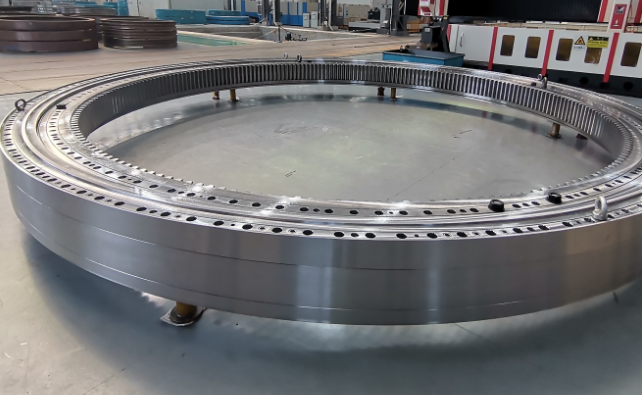
For a long time, China’s shield machine main bearings have relied on imports, facing risks of high prices and supply disruptions, which have restricted the construction of major projects. Led by IMR-CAS, more than 20 units have jointly tackled key problems, successfully breaking the technological blockade and realizing the independent development of large main bearings. Starting from materials, the team carried out full-chain research. They developed independent material specifications for key parts of large main bearings, broke through a series of key technologies such as purification preparation, homogenization control, low-stress regulation, deep quenching treatment, heterogeneous material compounding, high-precision processing and comprehensive service life evaluation. They also built a full-chain technical system covering structural design, material preparation, processing and assembly, testing and evaluation of large main bearings. A total of 10 sets of 3-meter, 6-meter and 8-meter-class main bearings for typical working conditions such as earth pressure, slurry and hard rock have been successfully developed.
Among them, the domestically produced 3-meter-class main bearing has successfully completed the construction of the East Extension Line of Shenyang Metro Line 1 with excellent performance. The 8-meter-class main bearing has passed the expert review led by Academician Qian Qihu, which confirmed that “all indicators have reached the international advanced level of similar products, and some indicators have reached the international leading level, which can meet the installation and application needs of extra-large diameter shield machines“. This year, the 8-meter-class main bearing will realize the excavation of the application verification demonstration section. The team will also cooperate with CCCC Tianhe to form an overall technical scheme, optimize the structure and develop a fully domestically produced large shield machine.
Construction of scientific facilities: North-south linkage to sprint toward key nodes
In the northern end of the motherland, the Mohe Station of China Remote Sensing Satellite Ground Station ushered in its first Spring Festival since its official completion and operation. The team from the Aerospace Information Research Institute, Chinese Academy of Sciences (AIRCAS) still stood guard at their posts to ensure the stable reception of remote sensing satellite data and carry out equipment inspection and maintenance. They ensured the completion of radome snow removal in extremely cold weather and collected equipment operation parameters to accumulate key data support for the stable operation of the system.
In Huizhou, Guangdong in the south, the construction site of the ADS remained in operation during the Spring Festival. He Yuan, Deputy Director of the Institute of Modern Physics, Chinese Academy of Sciences (IMP-CAS), led his team to station at the site, jointly tackling key problems in the installation of the high-intensity proton superconducting linear accelerator and the commissioning of the lead-bismuth fast reactor non-nuclear integration verification device. As the world’s first megawatt-class ADS experimental device, it is used to study the safe disposal of nuclear waste and the efficient breeding technology of nuclear fuel. Its ultimate goal is to maximize the resources and minimize the waste of nuclear fission energy, making nuclear fission energy a green, safe and sustainable basic nuclear energy for ten thousand years.
It is reported that the device needs to break through the world’s highest-power fully superconducting proton linear accelerator and build China’s first fourth-generation lead-bismuth reactor, which has been a goal pursued by the international nuclear fission field for 70 years. It can increase the utilization rate of nuclear fuel from about 0.6% to more than 90%, realizing complete circular utilization. At present, the core technologies of the device have been broken through, and the acceptance of key components will be completed this year. According to the plan, the construction and acceptance of the superconducting linear accelerator will be completed in 2026; the acceptance of the high-power spallation target will be completed in early 2027, and the acceptance of the entire device will be completed by the end of 2027; it will reach full-power operation in 2029 and realize the reprocessing fuel loading test based on spent fuel in 2030.
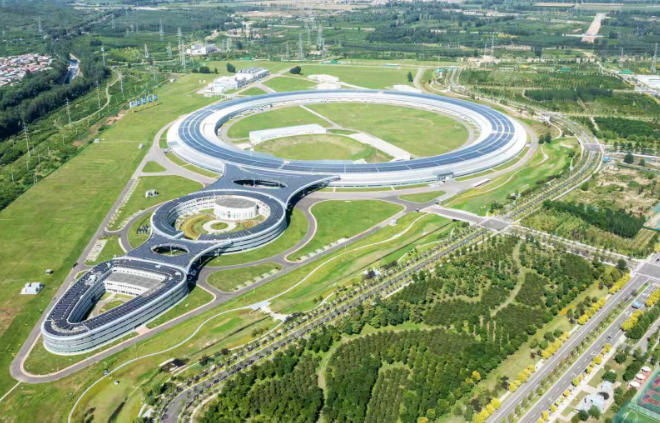
In addition, the High Energy Photon Source (HEPS) in Huairou, Beijing – China’s first high-energy synchrotron radiation light source and Asia’s first fourth-generation synchrotron radiation light source – passed the process acceptance in October 2025. Its overall performance has reached the leading level of similar international devices, marking China’s intergenerational leap in synchrotron radiation light sources and making China one of the few countries mastering the full-chain technology. After the Spring Festival, the team will comprehensively improve the performance of the accelerator and provide beamlines for users to carry out experiments related to major national needs and industrial innovation, so as to make preparations for the national acceptance in June and July this year.
Breakthrough in brain-computer interface: Postoperative effects expected to move toward human-AI collaboration
In Shanghai, the subject of China’s third invasive brain-computer interface (BCI) has completed the implantation surgery and is currently receiving use training. Researcher Li Xue from the Center for Excellence in Brain Science and Intelligence Technology, Chinese Academy of Sciences (CEBSIT-CAS) said that the subject has a higher learning efficiency. The team has helped him carry out rehabilitation training through the BCI and achieved obvious results. The specific postoperative effects are expected to be announced this year.
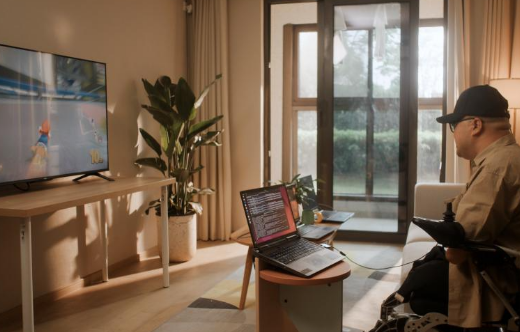
It is reported that China’s first two invasive BCIs have achieved phased results. The first subject successfully used mobile phones and computers by controlling the cursor, and the second realized brain-controlled electric wheelchairs, robot dogs and other equipment. Researcher Zhao Zhengtuo revealed that the next step is to integrate AI technology into the BCI workflow to achieve in-depth human-AI collaboration. For example, after a person controls the robotic arm to approach an object, the robotic arm can independently calculate the path and grasping force through its own camera to complete the subsequent actions, and the person can switch the control mode independently.
The perseverance of scientific researchers during the Spring Festival has witnessed the power of innovation. Various scientific research achievements are blooming everywhere. Scientific researchers bravely enter the no-man’s land of technology, challenge the commanding heights of science, and move forward firmly on the road of building a strong science and technology country.