
A major breakthrough has been achieved in the research and development of therapies for Alzheimer’s disease. A joint research team led by Researchers Li Wei, Hu Baoyang and Zhou Qi from the Institute of Zoology, Chinese Academy of Sciences, has developed a novel blood-brain barrier-permeable targeted protein degradation technology – Synthetic Peptide-guided Lysosome-Targeting Chimaera (SPYTAC). This technology has for the first time realized the synergistic clearance of beta-amyloid (Aβ) in both the peripheral system and the brain, holding promising potential to offer a new therapeutic strategy for patients with Alzheimer’s disease.
As the most common neurodegenerative disease, Alzheimer’s disease affects approximately 57 million people worldwide. Its typical pathological feature is the abnormal deposition of beta-amyloid (Aβ) in the brain. In recent years, therapies targeting Aβ clearance have shown the potential to slow down disease progression in clinical trials. However, existing therapeutic strategies, especially antibody drugs, are often accompanied by side effects such as cerebral inflammation and hemorrhage. How to efficiently eliminate pathogenic proteins while minimizing adverse reactions has become a critical challenge to be addressed urgently in the R&D of Alzheimer’s disease treatments.
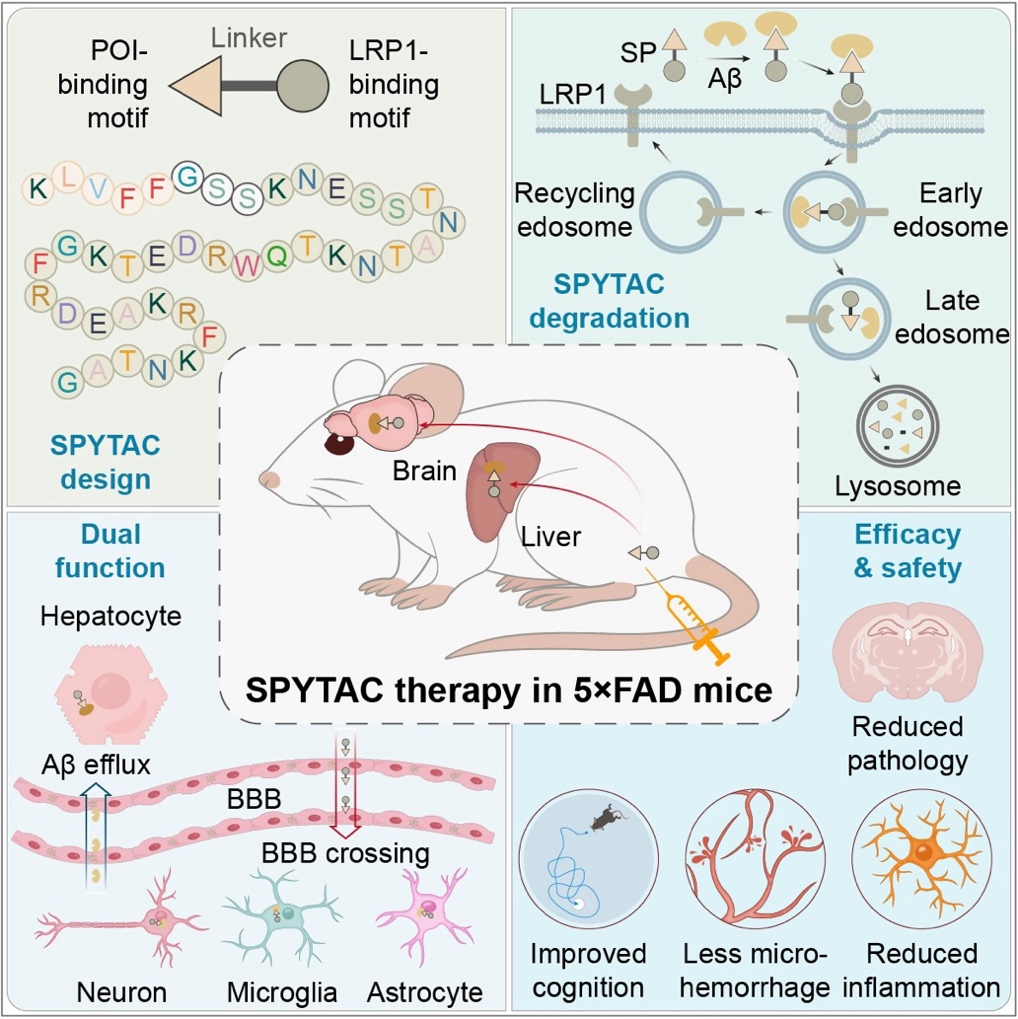
Compared with traditional anti-Aβ antibody drugs, the SPYTAC technology does not contain the crystallizable fragment (Fc) of antibodies. It thus avoids immune inflammatory responses and excessive activation of microglia, significantly reducing the risk of cerebral inflammation and microhemorrhage associated with cerebral amyloid angiopathy, and demonstrating higher therapeutic safety.
Experts commented that this research has broken through the bottlenecks of existing protein degradation therapies in terms of blood-brain barrier permeability and immune safety. It not only brings a completely new candidate strategy for the treatment of Alzheimer’s disease, but also blazes a new trail for the precise targeted therapy of central nervous system diseases and other disorders driven by extracellular pathogenic proteins.