
Nature of science education plays a decisive role in science education for children, and developing an understanding of the nature of science is one of the core goals of science education. Ages 0 to 6 years old are a critical period for brain development and cognitive formation. Providing nature of science education at this stage helps children form a correct understanding of science from an early age and lays a solid foundation for future science learning.
What is the nature of science? Simply put, it helps children understand that scientific knowledge is not fixed truth. Instead, it is understanding continuously revised by scientists through observation, questioning, and experimentation. Scientific inquiry has no standard answers. What matters most is learning to speak with evidence. These seemingly abstract concepts are the foundation of scientific literacy. When children understand what science is and how science works, they not only grasp science better but also develop curiosity, imagination, and critical thinking. This is highly significant as China builds a country strong in education and technology.
Survey results show that the current state of nature of science education for young children in China is far from satisfactory. Three major problems stand out.
First, young children’s overall understanding of the nature of science is weak. In the dimension of the nature of scientific knowledge, children perform poorly in understanding subjectivity of scientific knowledge, observation and inference, and evidence‑based science. Children are used to accepting standard answers. They focus heavily on facts but neglect the process of inquiry. In the dimension of the nature of scientific inquiry, the situation is even worse. More than 90% of children score low on all indicators. In daily science learning, children usually follow teachers’ instructions step by step. They rarely think independently. As a result, scientific inquiry becomes hands‑on but mindless.
Second, there are clear regional and school gaps in children’s understanding of the nature of science. The survey shows children in eastern China perform significantly better than those in the west. Children in better-resourced schools outperform those in under-resourced schools. This gap essentially reflects an unequal distribution of science education resources. Regional resource differences strongly affect children’s science learning.
Third, preschool teachers lack understanding of the nature of science and its importance. Teachers are key to science education. Effective nature of science teaching requires teachers to have a clear grasp of the nature of science. However, the survey finds that preschool teachers have very limited understanding of the nature of science. More than half know little about it. Even teachers who claim some understanding only grasp basic ideas, such as science being a hands‑on, evidence‑based process involving observation and experiments. More worryingly, teachers rank the importance of nature of science last among all science education contents. It falls far behind scientific knowledge, methods, and abilities, and even behind scientific spirit, attitudes, and responsibility.
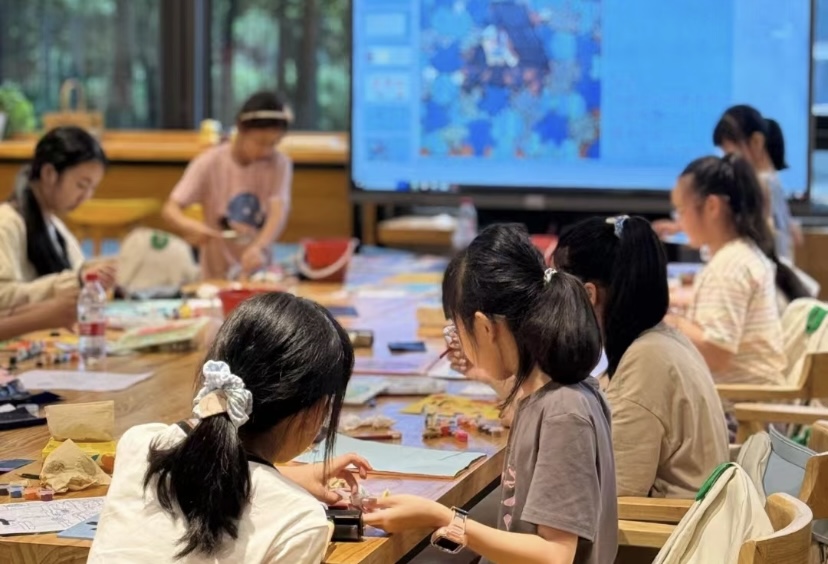
This knowledge-heavy, nature-neglect mindset directly leads to the absence of nature of science education in preschool classrooms. The tendency to emphasize knowledge over the nature of science stems from a long-standing knowledge-based education concept. Many preschool teachers treat science education as general knowledge teaching. They believe children only need to memorize scientific facts. Yet without understanding the nature of science, children only learn scattered facts. They cannot develop systematic scientific thinking, let alone creative abilities.
Meanwhile, the lack of attention to early childhood nature of science education is also influenced by families and society. First, families and society hold widespread misunderstandings about early childhood education. The public mostly focuses on visible outcomes, such as how many characters a child can read, arithmetic skills, and English words memorized. They pay little attention to scientific literacy and understanding of the nature of science.
Second, policy support for preschool science education is much weaker than for primary and secondary education. Combined factors have left nature of science education neglected in early childhood.
Young children’s understanding of the nature of science is not inborn. It develops gradually through exploration, experience, and interaction. To improve children’s understanding of the nature of science, efforts must be made at macro, meso, and micro levels. A collaborative ecosystem involving government, schools, families, and society is needed to bring nature of science education into young children’s daily learning and lives.
At the macro level, institutional design and resource support must be strengthened. Early childhood education brings the highest educational returns. Therefore, its value must be fully recognized. On the one hand, preschool nature of science education should be integrated into the overall science education system. Targeted guidelines should be issued to help kindergartens carry out such education with clear rules. On the other hand, more resources should go to underdeveloped regions. Special science education funds for western China, regional science education resource centers, and partnerships between strong and weak kindergartens can help fill hardware and software gaps.
At the meso level, institutional support and ecosystem construction are essential. High-quality teachers are the top priority for effective nature of science teaching. Training should be strengthened to improve teachers’ understanding of the nature of science and their teaching abilities. In addition, an open, diverse, and inclusive inquiry environment should be created for children.
At the micro level, teaching practice and interactive internalization should be emphasized. Nature of science education cannot rely on lectures. It must be based on experience. Children’s understanding should be promoted through inquiry experiments, deepened through scientific dialogue, and extended through home-kindergarten cooperation. In this way, the nature of science will take root in children’s daily lives.