
The global commodity market presented a market pattern of structural divergence and high-level volatility. Amid intertwined factors including fluctuating geopolitical sentiment, global supply-demand mismatches, and shifting macro policy expectations, energy prices retreated after surging, industrial metals strengthened sharply, and precious metals fluctuated slightly. The overall commodity index remained operating at a high range with intensified long and short market games. As of early trading on June 5th, the domestic comprehensive commodity index stood at 7,197.15 points, down 0.61% on a single day, showing a broad oscillating trend recently.
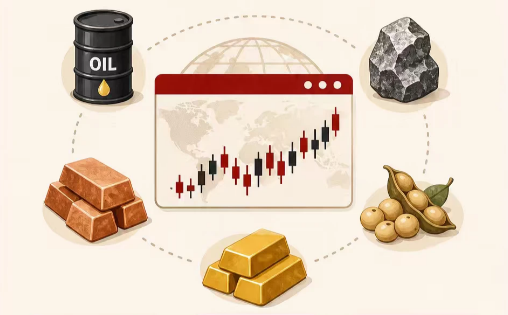
The energy sector has become the core focus of recent market fluctuations, with international crude oil prices leading a corrective decline. Previously boosted by Middle East geopolitical conflicts, international oil prices kept climbing and hit new stage highs. However, with the conditional ceasefire between Israel and Lebanon and rising expectations for a US-Iran peace deal, the geopolitical risk premium in the market receded rapidly, putting downward pressure on crude oil prices. Data shows that the main contract of US West Texas Intermediate (WTI) crude oil futures plunged by more than 3.00% in a single day, ending its previous three-consecutive-day rally, while Brent crude oil prices fell back to around $93 per barrel. The domestic refined oil market moved in tandem, with domestic gasoline and diesel prices cut at 24:00 on June 4th, down by 525 yuan per ton and 505 yuan per ton respectively, moderately reducing terminal oil consumption costs.
Industry institutional analyses point out that the fundamental backdrop of the crude oil market remains strong, and the tight global crude oil supply-demand balance has not been broken. Shipping risks in the Strait of Hormuz and production reduction policies of oil-producing countries provide solid support for oil prices, limiting the room for the current correction and indicating a continued high-level volatile trend in the future. Meanwhile, crude oil downstream products such as aromatics have maintained a weak supply and demand pattern. Coupled with expected maintenance of some production units, the market is generally in a destocking cycle, with prices fluctuating in line with crude oil.
In sharp contrast to the correction in energy products, the industrial metal sector continued its strong upward trend and staged an independent rally. In early June, core London Metal Exchange (LME) metal prices rose across the board. Copper prices stabilized above $14,000 per ton, with a year-to-date increase of 13.00%, while aluminum prices surged to a four-year high, pushing the industrial metal market into a “super squeeze” cycle.
The rally in industrial metals is driven by dual supply and demand factors. On the supply side, capacity expansion at major global metal producing regions is constrained, smelters in some regions have suspended production for maintenance, and market inventories remain at historically low levels. On the demand side, the steady recovery of global manufacturing has driven robust rigid demand for copper, aluminum and other industrial metals from new energy, high-end manufacturing and other emerging sectors. Combined with optimistic market expectations for future demand recovery, these multiple positive factors have fueled the rally in metal prices. Institutions warn that the supply-demand mismatch in industrial metals is worsening, approaching a critical point for further price increases, and the strong market trend is expected to continue.
The precious metals sector maintained narrow range volatility with balanced long and short market sentiment. Cooling global geopolitical risks have weakened safe-haven buying for gold, curbing its upward momentum and narrowing its gains. Nevertheless, expectations of monetary policy easing among major global economies and a weak US Dollar Index have underpinned precious metal prices, preventing sharp declines and keeping them fluctuating at high levels with cautious overall trading sentiment.
The agricultural product market remained relatively stable with mild price movements. The latest data released by the United States Department of Agriculture (USDA) shows that export sales of soybeans in the 2025/2026 marketing season have rebounded steadily, reflecting resilient overseas demand and supporting stable prices of domestic bean-related products. The overall supply-demand structure remains balanced with no significant driving force for sharp price fluctuations.
Overall, the commodity market has entered a critical window in June 2026, shaped by intertwined policy, supply-demand and geopolitical variables. The implementation of new industry regulations and industrial chain restructuring have catalyzed distinct cyclical market characteristics. Institutions predict that the divergent market pattern will persist in the short term. Energy products will face heightened volatility driven by recurring geopolitical sentiment, industrial metals will remain strong on the back of tight supply-demand fundamentals, and precious metals will maintain high-level consolidation. Market participants will closely monitor developments in the Middle East, the pace of Federal Reserve monetary policy adjustments, and the recovery momentum of domestic terminal demand, three core variables that will dominate future commodity price trends and market style shifts.