
With the arrival of the rainy season, various mushrooms sprout from the ground. While fungus lovers look forward to delicious wild mushrooms, many hope to master reliable identification skills. Recently, a research team from the Chinese Academy of Sciences (CAS) launched the Fungi Kingdom Database, providing comprehensive holographic data to help the public identify mushrooms accurately.
The Fungi Kingdom Database consists of two freely accessible sub-databases: the Southwest China Macrofungal Resource Database and the Yunnan Wild Mushroom Fruiting Body 3D Morphology Database.
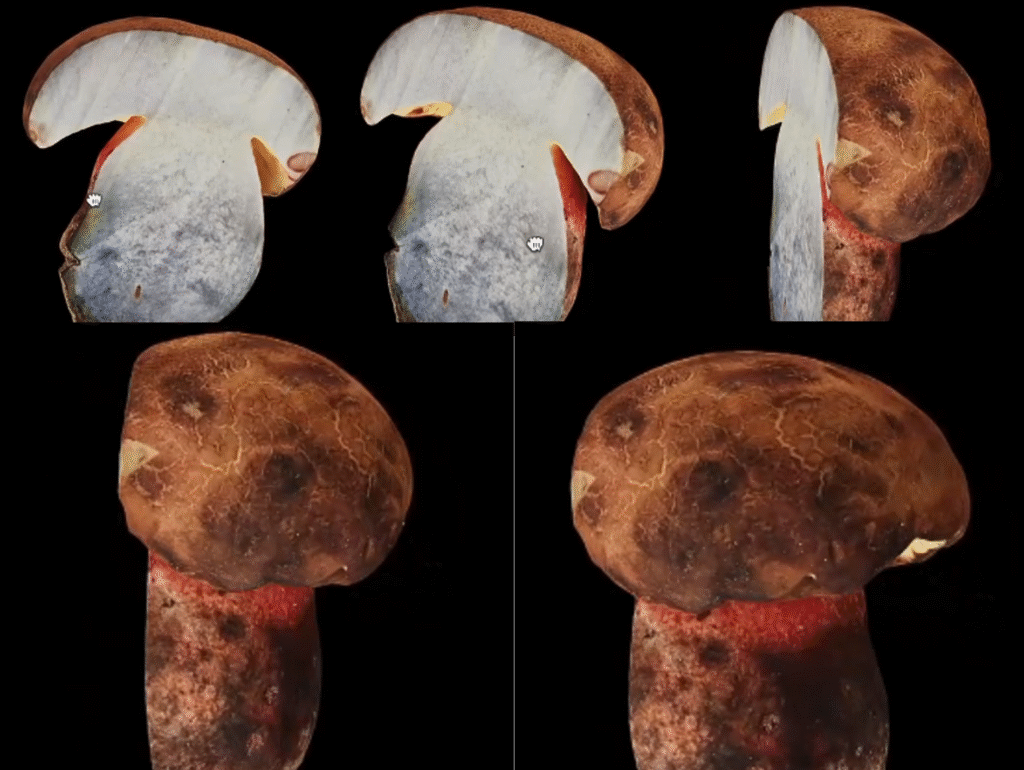
Researchers at the Kunming Institute of Botany hang and photograph freshly picked wild fungi to capture full 360° imagery. All data is uploaded to the Yunnan Wild Mushroom Fruiting Body 3D Morphology Database. So far, the database holds 423 high-quality 3D fungal models covering 182 common macrofungal species across 66 families. Many fungal species look nearly identical in flat 2D images and are easy to mix up. Three-dimensional models deliver a critical visual reference for ordinary people to distinguish wild mushrooms.
Beyond supporting public identification, the database creates digital twins of wild fungi and accelerates the digital transformation of fungal resources. It also opens up multiple new possibilities for integrated artificial intelligence (AI) applications.
Wu Gang, Researcher at the Kunming Institute of Botany, CAS: “In the future, we can train AI models with these 3D data to develop a widely anticipated mobile phone AI mushroom recognition tool. The data can also support industrial production, such as building automated robots that pick different cultivated edible fungi.”
Digital encyclopedia of wild fungi goes online: Reliable references for fungal identification
Launched alongside the 3D morphology database is the Southwest China Macrofungal Resource Database. It currently stores 8,791 entries of fungal species and specimen data, plus more than 28,000 photos of fungal fruiting bodies, laying a solid foundation for species recognition and taxonomic appraisal.
The 3D morphology database prioritizes authenticity by recreating fresh wild fungi in full 360° three-dimensional forms. The resource database, by contrast, pursues comprehensiveness. It compiles extensive species information including morphology, molecular characteristics, ecological distribution and specimen collection locations. Such integrated data resources are of great significance within China.
Less than 10% of the world’s macrofungal species have been formally described and named. Relying on only one type of information makes precise identification extremely difficult. Cross-referencing multi-dimensional data greatly aids identification of known wild fungi and discovery of new species alike.
Wu Gang, Researcher at the Kunming Institute of Botany, CAS: “Suppose we collect a fungal specimen in the wild. Morphological comparison can roughly tell us its genus. Further molecular sequencing and cross-checking against the database will accurately determine its exact species.”
Monitoring data from the Yunnan Provincial Center for Disease Control and Prevention (Yunnan CDC) shows June to August is the annual peak period for wild mushroom poisoning. Most incidents stem from families picking and consuming unknown wild fungi themselves. Health experts advise residents to only buy and eat wild mushrooms from formal markets and restaurants, and never pick unidentifiable fungi in the wild.
Poisonous mushroom lookalikes trigger frequent poisonings: How to tell them apart?
June through August sees mass wild mushroom yields as well as a sharp rise in poisoning cases. Most toxic incidents involve highly toxic mushrooms that closely resemble edible varieties, acting as master mimics in the fungal world. How can people distinguish them safely?
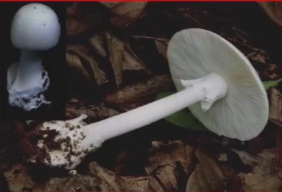
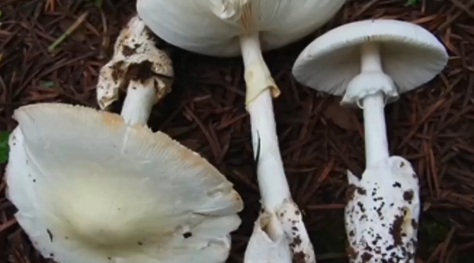
Liu Zhitao, Director of the Nutrition and Food Hygiene Institute, Yunnan CDC: “This mushroom is Amanita exitialis, commonly known as the deadly white grisette. It is highly toxic; merely 50 grams can kill an adult, and no effective antidote exists. The fungus below it, Amanita hemibapha, is edible. The two look extremely similar and are hard to differentiate with the naked eye. Another pair includes toxic Amanita subjunquillea and edible Amanita rubrovolvata. These two also share nearly identical appearances, making visual identification challenging.”
A practical warning standard for spotting toxic wild fungi: stay highly cautious of mushrooms with three features – a cap on top, a ring around the stem, and a cup-like volva at the base. Most fungi with this structure are poisonous.
Debunking common myths about mushroom toxicity: Scientific Knowledge is essential
Globally, over 2,000 wild mushroom species are edible. China hosts more than 600 toxic fungal species, accounting for roughly half of the world’s total toxic mushroom varieties. Wild fungi feature vast morphological diversity, creating major identification barriers for ordinary citizens. Many folk sayings lack scientific backing and cannot be trusted, such as “brightly coloured mushrooms are toxic” and “mushrooms eaten by insects are safe to eat.” The safest rule is never to pick or purchase unidentified wild fungi.
Liu Zhitao, Director of the Nutrition and Food Hygiene Institute, Yunnan CDC: “The claim that brightly coloured mushrooms are poisonous while dull-coloured ones are safe is completely false.”
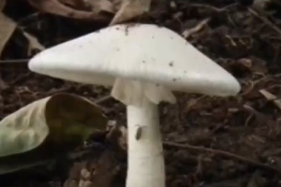
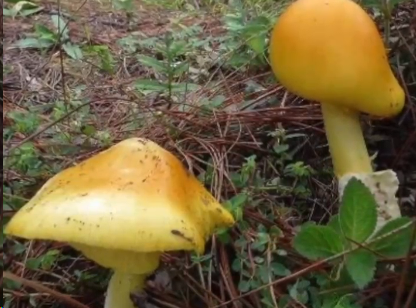
The upper specimen shown here is lethally toxic, while the vividly coloured fungus beneath it is safe for consumption. Another widespread misconception claims toxic mushrooms will turn black when boiled with ginger, rice or green onions, while harmless ones retain their colour. This idea is unscientific. Mushroom toxins are alkaloids that do not react with silverware, ginger or rice at all.
It is also wrong to believe fungi bitten by bugs are non-toxic. Scientific research confirms mature highly toxic Amanita species can still attract maggots and insects. Toxins found in dangerous fungi such as Rubroboletus subsanguineus and lethal Amanita species are chemically stable. Ordinary household cooking methods cannot break down or eliminate these toxins.