
As high school seniors across China fill out their college entrance examination applications this summer, 38 new undergraduate majors have been approved for regular universities. Many of them open enrollment this year, offering broader choices for candidates and parents. This report takes an in-depth look at one standout addition: the Digital Cultural Tourism major.
The Outline of the 15th Five-Year Plan for National Economic and Social Development (2026-2030) has enshrined the goal of building China into a tourism power in a national five-year plan for the first time. It defines cultural tourism as a pillar industry, a livelihood industry and an industry that boosts people’s well-being. Across the country, the cultural tourism sector is rolling out new digital formats at full speed. These include smart scenic spots, immersive cultural and museum exhibitions, digital intangible cultural heritage, and the cultural tourism Metaverse.
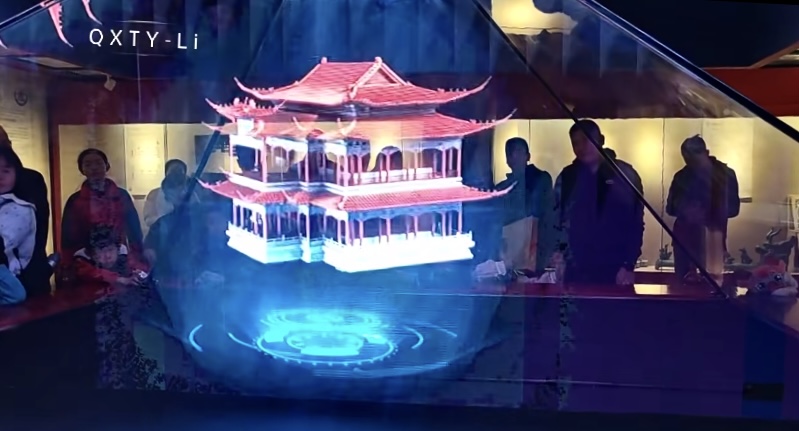
Digital technologies have become a powerful engine driving industrial transformation. Naked-eye 3D recreates scenes depicted in Prologue to the Tengwang Pavilion. Virtual Reality (VR) brings Dunhuang flying apsaras out of ancient murals. Digital Twin platforms enable centralized, intelligent management of tourist attractions via a single screen. AIGC continuously generates short-video cultural tourism content, while immersive live performances fuel booming night tourism markets.
The industry is expanding rapidly, yet it faces a severe talent crunch. According to the 2025 Report on Skilled Talent Demand Forecast for the Cultural Tourism Industry, the national shortage of skilled cultural tourism workers reached an estimated 2 million in that year. Emerging segments such as digital operation and smart tourism solution development account for the largest share of the talent gap.
The Ministry of Education officially launched the undergraduate major in Digital Cultural Tourism this year. Classified under Tourism Management within the Management discipline, graduates earn a Bachelor of Management degree. Beijing International Studies University and Dalian University of Foreign Languages are among the first institutions approved to launch the major and recruit students nationwide. This interdisciplinary program bridges culture, tourism and digital technology. It targets the sector’s million-scale talent shortage, forming a brand-new talent pipeline to support the construction of a cultural power and a tourism power.
Li Pengbo, Professor at the School of Tourism Sciences, Beijing International Studies University, shared his insights: “China is fully advancing the AI Plus Initiative. As we deepen efforts to build a cultural power and a tourism power, the Ministry of Culture and Tourism has identified AI Plus Cultural Tourism as a core development priority for the sector. Against this backdrop, digital technologies are reshaping resource allocation, product forms and business models across cultural tourism. The industry urgently needs a large pool of interdisciplinary professionals equipped with creative scene design thinking and AI-for-tourism expertise. Digital Cultural Tourism builds on cutting-edge technologies including artificial intelligence, big data and the Metaverse to address new industry challenges that did not exist a decade ago. Examples include digital restoration of cultural relics in museums, intelligent passenger flow analysis for scenic areas, immersive night tourism planning, and multilingual cultural tourism content for global outreach.”
Not a repackaged tourism management major, but a brand-new interdisciplinary track
Digital Cultural Tourism creates a new bridge linking technology and civilization. Its scope covers digital preservation of cultural relics, immersive cultural tourism experiences, intelligent governance of scenic sites, and global digital dissemination of Chinese culture. Centered on upgrading and expanding service industries, this major breaks the boundaries of traditional tourism education. Its innovative interdisciplinary training model supplies versatile talent for high-quality growth in cultural tourism.
Many mistakenly believe Digital Cultural Tourism is simply Tourism Management with a “digital” label. In reality, the two programs differ fundamentally. The core of Digital Cultural Tourism lies in cross-border integration of cultural tourism and technology. Its curriculum is not a rigid mix of standalone tourism and computer science courses. Instead, it embeds technical tools deeply into real cultural tourism scenarios. Students learn to apply AI, big data, Extended Reality (XR), Digital Twin and other technologies to solve practical digital transformation problems in the industry.
They master key practical skills: generating cultural tourism content with AI, fixing humanistic details missing from AI outputs, and leveraging cloud computing to cut startup and operational costs for small and medium-sized cultural tourism projects. Graduates can step straight into industry roles upon graduation, fully matching real market demands.
Li Gaoguang, Director of the Marketing & E-Commerce Department at the School of Tourism Sciences, Beijing International Studies University, explained the training orientation: “This major cultivates an entirely new type of professional: the new cultural tourism practitioner. Such talents possess deep cultural tourism literacy and hands-on technical capabilities, capable of reshaping tourist experiences through digital tools. Its curriculum follows a three-in-one interdisciplinary framework: cultural content, tourism industry and digital technology. It stands apart from both traditional Tourism Management and pure Computer Science majors. During their studies, students take part in real-world projects, including digital exhibition design for museums, online operation and promotion of tourist sites, and digital upgrading of rural cultural tourism. They build cultural aesthetic awareness while sharpening digital technical skills, collaborating with faculty and peers to solve live challenges facing today’s cultural tourism industry.”
Classrooms for Digital Cultural Tourism extend far beyond lecture halls. Students learn in immersive intelligent laboratories fully equipped with tools to build high-precision AI digital scenes, 3D cultural relic models and interactive digital humans. They experience cutting-edge digital cultural tourism formats from museums and scenic sites firsthand. This hands-on exposure broadens their vision for integrating creative cultural tourism concepts with digital technology.
Within virtual spaces built by AI tools in university digital tourism labs, VR and Digital Twin technology transport students instantly to any tourist attraction they wish to visit. Today, all 5A-level scenic spots nationwide have completed full digital transformation. Digital technology is reshaping every layer of the cultural tourism sector.