
NVIDIA officially launched its new flagship H200 Tensor Core Graphics Processing Unit(GPU) in San Jose, California, marking a major leap forward in high-performance computing for generative artificial intelligence. Built on advanced 3-nanometer manufacturing technology, the new GPU delivers a 400 percent uplift in Artificial Intelligence(AI) computing power and a 60 percent improvement in power efficiency compared with the previous generation, setting a new benchmark for large-scale AI model training and deployment.
The H200 GPU is tailored to address the core bottlenecks of modern generative AI development, including massive parameter model training, real-time intelligent reasoning, and high-volume data processing. Equipped with upgraded tensor computing cores and ultra-high-bandwidth memory architecture, the chip can seamlessly support the training and operation of trillion-parameter large language models, multimodal AI systems, and industrial intelligent simulation programs. Unlike traditional GPUs that focus solely on computational speed, the H200 optimizes energy consumption throughout the entire computing cycle, effectively reducing the operational costs of super-large AI computing centers.
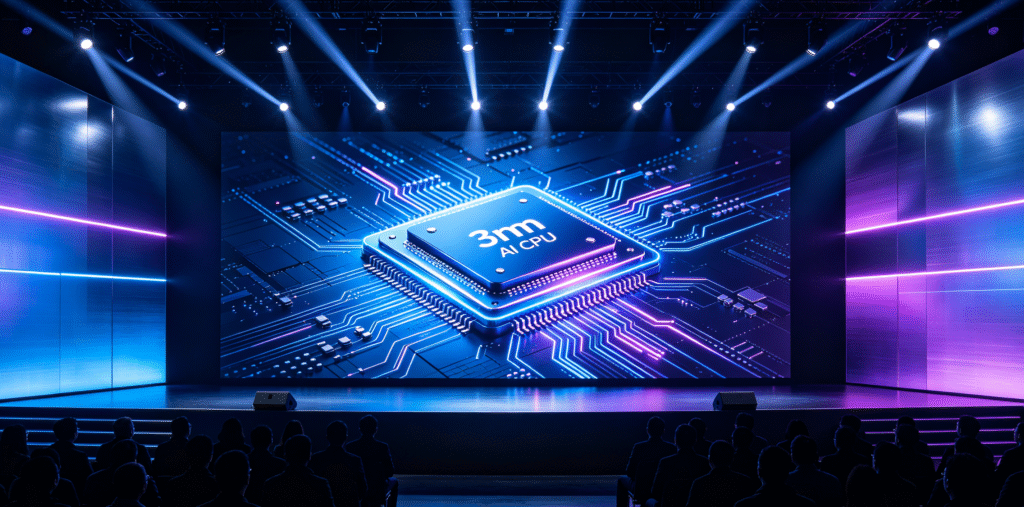
During the launch event, Jensen Huang, founder and CEO of NVIDIA, emphasized the strategic significance of the new product for the global AI industry. “This is a leap for generative AI,” Huang stated. “The H200 breaks the trade-off between computing performance and energy consumption, enabling enterprises and research institutions to build more efficient, low-carbon, and scalable AI infrastructure. It will accelerate the commercial implementation of generative AI across healthcare, autonomous driving, cloud computing, and industrial manufacturing.”
Industry analysts point out that the release of the H200 GPU comes amid a global surge in AI infrastructure investment. Driven by the vigorous development of generative AI, global capital expenditure on AI infrastructure is expected to reach $893 billion in 2026, with high-performance GPU chips serving as the core hardware support for the industry boom. The superior power efficiency of the 3nm H200 chip will also help alleviate the energy consumption pressure brought by the large-scale deployment of AI models, solving a key pain point restricting the long-term development of the AI industry.
In addition to performance upgrades, NVIDIA has completed adaptive optimization for mainstream AI frameworks and cloud computing architectures. The H200 GPU is fully compatible with the latest versions of TensorFlow, PyTorch and other open-source frameworks, and supports the new generation of cloud data center rack architectures, helping cloud service providers quickly upgrade their AI computing service capabilities. Multiple global tech giants and cloud vendors have announced plans to deploy H200 GPU clusters in their new data centers within the second half of 2026.
With the continuous iteration of AI hardware technology, the integration of high-performance computing, low-carbon energy consumption and intelligent computing has become an inevitable trend in the technological evolution of the AI industry. NVIDIA’s H200 GPU not only further consolidates the brand’s leading position in the global AI chip market but also lays a solid hardware foundation for the innovative breakthrough and large-scale popularization of generative AI technology in the next stage.
Looking ahead, industry insiders predict that with the widespread application of the H200 GPU, the training cycle of large AI models will be greatly shortened, and the cost of industrial AI applications will be significantly reduced, which will trigger a new round of technological innovation and industrial upgrading in the global digital economy.