
A Japanese new energy tech firm Power Solid has achieved a historic breakthrough in the mass production of all-solid-state batteries, successfully overcoming the long-standing industrial challenges of high cost and unstable cycle life. The newly developed ultra-density solid-state battery officially rolls off the automated production line in July 2026, marking the official entry of the new energy vehicle industry into the 1,000-kilometer ultra-long battery life era.
For more than a decade, traditional lithium-ion batteries have restricted the development of electric vehicles. They suffer from low energy density, limited driving range, slow charging speed, and potential safety hazards such as thermal runaway and fire risks. Although solid-state battery technology has been regarded as the core next-generation power battery solution by the global industry, problems including fragile solid electrolyte materials, complex packaging processes, and high manufacturing costs have long prevented large-scale commercial application.
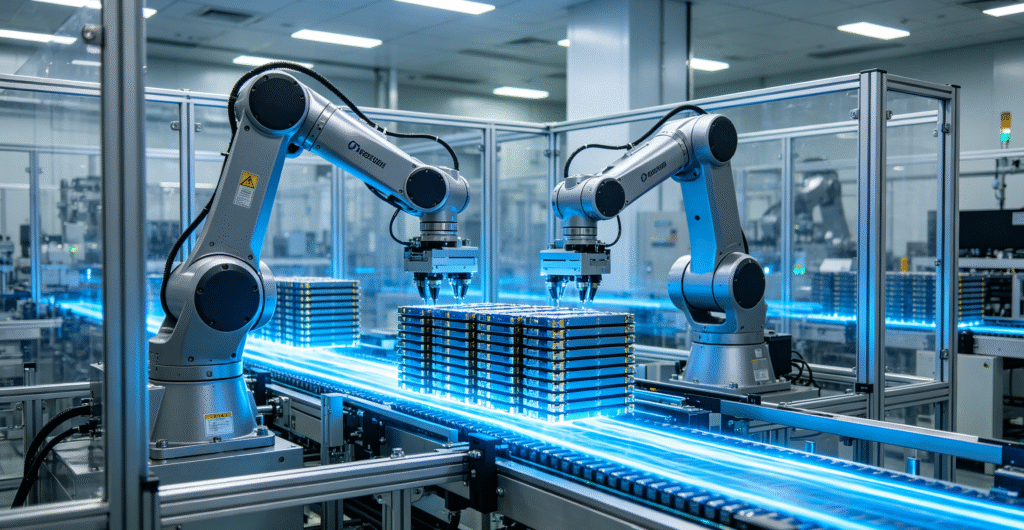
Power Solid’s new generation of solid-state batteries abandons the traditional liquid electrolyte and porous diaphragm structure. The team adopts a self-developed ceramic composite electrolyte material and an integrated lamination molding process, which greatly improves the structural stability and energy density of the battery. Compared with mainstream ternary lithium batteries on the market, the new battery’s volumetric energy density is increased by 65%, while its overall weight is reduced by 30%, effectively solving the contradiction between battery capacity and vehicle lightweighting.
In professional performance tests, the newly mass-produced solid-state battery achieves excellent comprehensive indicators. The supporting electric vehicle can reach a maximum cruising range of 1,028 kilometers on a single full charge under standard working conditions. In terms of charging efficiency, it supports 10-minute ultra-fast charging, which can replenish 80% of the battery power, greatly improving the energy replenishment efficiency of new energy vehicles. In addition, the battery has passed extreme environment tests, maintaining stable discharge performance in low-temperature environments of minus 40 degrees Celsius and high-temperature environments of 85 degrees Celsius.
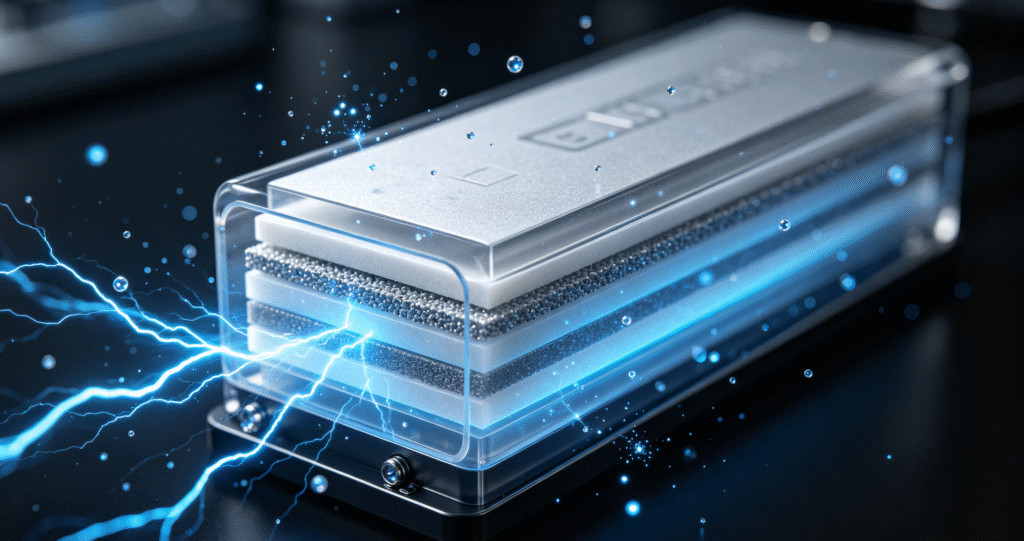
Safety performance, the core pain point of new energy batteries, has also been comprehensively optimized. The all-solid-state structure completely eliminates the risk of liquid electrolyte leakage and combustion. After multiple extreme tests such as acupuncture, extrusion and high-temperature baking, the battery shows no thermal runaway, open flame or explosion, achieving a qualitative leap in safety compared with traditional lithium batteries. Meanwhile, the battery’s cycle life exceeds 2,000 charge-discharge cycles, meeting the long-term use needs of civilian vehicles.
Industry analysts said that the mass production of low-cost, high-stability solid-state batteries will completely reshape the pattern of the global new energy vehicle industry. At present, the bottleneck of electric vehicle popularization is no longer intelligent driving technology, but battery endurance, safety and energy replenishment efficiency. The technological breakthrough of Power Solid will effectively eliminate user mileage anxiety and accelerate the comprehensive replacement of fuel vehicles by electric vehicles.
It is reported that Power Solid has reached strategic cooperation with many mainstream automobile manufacturers in Asia, Europe and North America. The first batch of mass-produced solid-state batteries will be officially installed in new models launched in the fourth quarter of 2026. The company plans to build three super production bases within two years, with an annual production capacity of 12 million vehicle-grade solid-state batteries, to meet the global market demand.
In addition to the new energy vehicle field, this solid-state battery technology can also be widely applied in smart drones, aerospace equipment, portable energy storage devices and other scenarios. With the gradual decline of mass production costs, the technology is expected to fully replace traditional lithium batteries in consumer electronics and industrial energy storage fields within three years.
Industry institutions predict that driven by the large-scale application of solid-state batteries, the global new energy vehicle market penetration rate will exceed 65% by 2028, and the global power battery industry will usher in a new round of industrial upgrading and reshuffling.