
Old commercial districts in Guangzhou, Guangdong Province, draw huge crowds thanks to Guzi Markets. Recreational sea angling gains popularity in Dalian, Liaoning Province. New business forms at pet resorts deliver novel experiences in Suzhou, Jiangsu Province. These vivid scenarios illustrate a new consumption logic: consumers are willing to pay for experiences and emotional value.
The General Office of the State Council issued the Work Plan for Accelerating the Cultivation of New Growth Drivers in Service Consumption. The document proposes leveraging pilot platforms featuring new business models and consumption scenarios. It supports the development of innovative emotionally oriented and experiential service consumption scenarios that can powerfully drive consumption growth. What new trends emerge as consumption shifts from goods purchasing to experience consumption? What novel scenarios and business forms have sprouted? Reporters conducted field visits across multiple regions.
New business forms fuel fresh vitality
Guzi markets attract swarms of visitors
On weekends, Guzi Markets open as scheduled at Kingdee Plaza in Yuexiu District, Guangzhou. Young shoppers weave between stalls. The term “Guzi” derives from the English word “goods”. It refers to licensed derivative merchandise from comics, animations and games, including collectible cards, badges and scale figures.
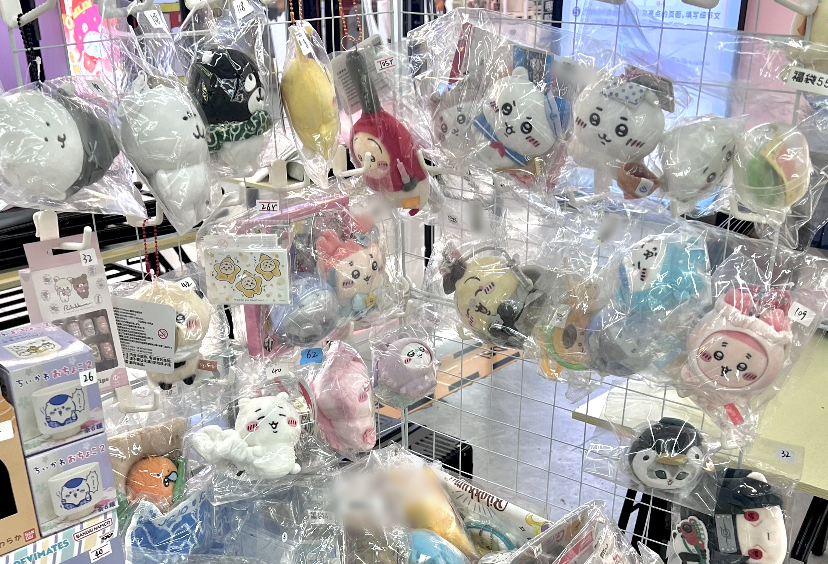
Yan, a 25-year-old vendor, set up his stall when the mall began its transformation. He started part-time before shifting to full-time operations as the market maintained stable long-term activity. “In the early days, most Guzi were Japanese animation merchandise. Now domestic animation intellectual properties (IPs), game IPs and original creative Guzi also enjoy great popularity,” Yan said. Students and young office workers form the core consumer group. They pursue not only hit products but also good condition, rarity and official authenticity. Niche and lesser-known IPs maintain steady demand.
Young creative creators also run stalls at the market. Liao specializes in original two-dimensional hand-drawn art and accepts custom commissions on-site. He finishes one painting within 8 to 10 minutes, attracting crowds of onlookers. “Enthusiasts gather here, and the atmosphere is welcoming. Original works are well received. I have found a channel to monetize my hobby,” Liao commented.
Many young consumers say offline markets enable face-to-face communication, offering stronger ritual experience than online shopping. “We are not merely buying merchandise. We purchase emotional value and resonance with fellow hobbyists,” one consumer noted. The market serves as both a consumption venue and a social hub for young people.
Lu Guoneng, General Manager of Kingdee Plaza, said traditional businesses struggled previously, with extremely low shop occupancy rates. In 2024, the mall pivoted toward two-dimensional consumption. It rolled out inclusive, low-threshold support policies for vendors. Stall fees range from only 10 to 30 yuan per day. The mall provides free desks, chairs and basic facilities, making it easy for enthusiasts to trade and collect Guzi. The market opens every Friday, Saturday and Sunday, hosting more than 200 permanent stalls. Thousands of applicants compete for stalls each session, and spaces are fully booked during holidays.
“This business wins favor among young people because it precisely satisfies their demands for emotional expression, community socializing and self-identity. Limited-edition collections and social sharing further amplify the emotional satisfaction brought by purchases,” said Liu Shimeng, Associate Professor at the Institute of Economic and Social Research, Jinan University.
The transformation has delivered win-win outcomes for the shopping mall. “Since the shift, weekend visitor flows have grown three to four times. Overall sales have surged by over 200%, and two-dimensional-related revenue accounts for 80% of total turnover,” Lu Guoneng introduced. Guzi Markets create more than 400 flexible jobs daily. Many students and young people can run stalls while visiting the market as customers.
New scenarios deliver unique experiences
Recreational sea angling rises in popularity

Early in the morning at the harbor of Zhangzidao Town, Changhai County, Dalian, Captain Ge Qi taps on his smartphone. He quickly completes voyage registration via the mobile mini-program Sea Angling E-Port. He guides four anglers onboard, activates the Beidou positioning system, and the white recreational fishing vessel departs the dock. Soon the boat reaches the fishing ground known as “Fazidi”.
The anchor drops, bait is attached, and fishing rods are cast. “A bite!” The rod tip jerks sharply. Visitor Zhang Jiebin grips the rod firmly, reeling and releasing the line. After several rounds of tugging, he lands a yellowtail amberjack. Ge Qi takes the fish and places it in the live fish tank.
Ge Qi is a local resident of Zhangzidao and one of the first sea angling operators on the island. He once earned a living from traditional fishing. Noticing frequent inquiries from tourists about sea angling, he bought his first fishing vessel on a trial basis. Over 10 years, he expanded from one small boat to founding a company with six professional angling vessels. “Visitor numbers and revenue have doubled in recent years. Foreign anglers also travel here for the experience,” Ge Qi said. Consumer groups continue to grow younger, with rising numbers of post-1990s and post-2000s participants.
Shi Jianren, Professor at the School of Economics and Management, Dalian Maritime University, explained that sea angling is evolving into an integrated consumption model combining tourism, sports and social interaction. Many young people regard sea angling as a trendy lifestyle. They care less about catching fish, and value emotional rewards and the experience of getting close to nature.
Ge Qi shared his cost and revenue breakdown. Captain service costs range from 600 to 700 yuan per trip. Chartering an entire boat costs 2,500 yuan daily, with capacity for four to five guests. Most anglers stay on the island for two to three days, and some remain for half a month. Last year, a single fishing vessel operated by his company generated revenue of 150,000 yuan.
Changhai County has launched multiple initiatives to boost sea angling. It standardizes management of recreational fishing boats. Every vessel is equipped with Beidou positioning, and passenger insurance is provided. A total of 31 designated sea angling zones have been defined. In 2025, more than 5,000 tourism practitioners received training to improve service standards and safety awareness.
The county developed the Sea Angling E-Port mini-program, offering one-stop services including boat reservations, weather alerts and consumption coordination. At present, Changhai County hosts 10 specialized sea angling clubs and 557 recreational fishing vessels. In 2025, the region received 190,000 sea anglers. Related tourism revenue hit 130 million yuan, a year-on-year increase of 44%. Growth in consumption extended to supporting industrial chains including homestays, catering and fishing gear retail, rising by more than 30%.
New demand drives new supply
Pet blocks attract streams of visitors
On the afternoon of July 22nd, Chongyunxiang OMITOFEE Pet Block in Yangcheng Lake Peninsula Tourist Resort, Suzhou Industrial Park, bustled with activity.
Resident Gu brought her pet dog to browse diverse shops. At a pet photography studio, photographers captured lovely snapshots of pets. In the open-air playground, dogs ran freely. Neat small tables lined the pet fresh food restaurant, featuring a wide range of pet treats.
Shi Yeran, General Manager of Chongyunxiang OMITOFEE, said more than half a year after opening, the block received a peak of over 50,000 visitors in one day. Many tourists travel here from other cities.

This pet block was previously a cultural tourism precinct. It once suffered low visitor numbers due to its remote location and single business offerings. “Market research shows the pet consumption market keeps expanding. Trips with pets have become a common demand for pet owners,” an official from Suzhou Industrial Park explained. The park invested roughly 100 million yuan to renovate the original precinct. The finished pet-themed block covers 42.5 mu, with a construction area of over 10,000 square meters. Pet industry brands were brought in to manage operations.
The renovated block integrates exhibition, experience, consumption and socializing. It supports diverse services including pet catering, grooming, photography and boarding.
According to Shi Yeran, the block regularly hosts events such as pet fashion weeks, paw-themed lifestyle markets and “fur baby” concerts. These events draw large crowds. A single event can generate hundreds of thousands of yuan in consumption.
Zheng Qiongjie, Research Fellow at Nanjing Academy of Social Sciences, commented that pet-oriented projects turn pet consumption into scenario-based, experiential and social activities. Consumption potential is unlocked by delivering emotional value that exceeds consumer expectations.
For buyers, pet products and services represent far more than physical goods. They purchase emotional experiences and a particular lifestyle.
Statistics show China’s urban pet (dogs and cats) consumption market exceeded 300 billion yuan in 2025. Many pet owners hope to travel with their companion animals, spurring the rapid rise of new business forms including pet-themed hotels and pet resorts.