
The United States (U.S.) Federal Reserve kept its benchmark interest rate unchanged at its July policy meeting, extending its rate pause for the fifth consecutive time while signaling a hawkish stance that leaves room for additional tightening later this year.
The Federal Open Market Committee (FOMC) voted to maintain the federal funds rate target range at 3.50% to 3.75%, a decision widely anticipated by global financial markets. Nevertheless, the meeting delivered a divided vote that reflected growing disagreement among policymakers over inflation risks.
Three regional Fed presidents dissented from the decision and favored a 25-basis-point rate increase at the July gathering, marking the first time since 2016 that three committee members have opposed a steady-rate outcome. The dissenters argued that persistent sticky inflation and resilient economic activity warrant continued monetary tightening to cool price pressures.
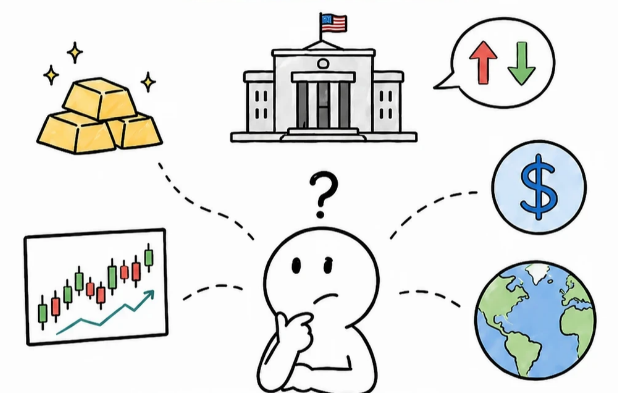
In its official policy statement, the FOMC acknowledged solid ongoing expansion in U.S. economic activity, steady labor market conditions and sustained low unemployment levels. At the same time, the committee emphasized that inflation remains notably above the Fed’s 2.00% long-term target, with lingering uncertainties including geopolitical tensions in the Middle East and volatile global energy prices.
Officials reiterated their commitment to bringing inflation fully back to target and stressed that future policy moves would remain data-dependent. The Fed ruled out a preset policy path and reserved the option to resume rate hikes if incoming economic data shows insufficient progress on inflation cooling.
During the post-meeting press conference, Fed Chair Kevin Walsh pushed back against market speculation of a higher acceptable inflation threshold, reaffirming that price stability remains the central bank’s top priority. He avoided offering explicit forward guidance for the September meeting, stating that policymakers would continue to evaluate real-time indicators on inflation, employment and growth before making new policy judgments.
Global financial markets reacted sharply to the hawkish pause. U.S. equities tumbled in late trading, with the Dow Jones Industrial Average dropping more than 1,150 points, while the Standard & Poor’s (S&P) 500 and Nasdaq Composite also closed lower. The U.S. dollar index rose sharply before paring gains, and long-term U.S. Treasury yields climbed, reflecting investor concerns over prolonged inflationary pressures. Gold prices edged higher amid market volatility, while emerging market assets experienced short-term pressure before stabilizing.
According to the CME FedWatch Tool, market pricing for a 25-basis-point rate hike in the September FOMC meeting fell to around 57.00% following the policy release, though traders have not fully ruled out additional tightening for the remainder of 2026.
Wall Street analysts noted that the July pause does not mark the end of the Fed’s tightening cycle. Inflation readings, crude oil prices and monthly nonfarm payroll data will be the critical factors determining the central bank’s next move.
For the global economy, the Fed’s rate hold offers temporary relief to emerging markets, easing capital outflow pressures and local currency depreciation risks. However, economists warned that elevated policy uncertainty remains. A resumption of rate hikes would tighten global liquidity conditions again, weighing on international trade, commodity markets and cross-border capital flows.
Chinese macroeconomic analysts said the Fed’s prolonged high-rate environment means external monetary conditions will stay restrictive rather than turning loose anytime soon. China will continue to implement independent monetary policy focused on boosting domestic demand, with narrowed Sino-U.S. interest rate differentials creating marginally improved external policy space.
Market participants are now closely monitoring upcoming U.S., consumer price index (CPI), core personal consumption expenditures (PCE) inflation and labor data, as investors await clearer clues for the Fed’s September policy decision.