
Large-scale scientific facilities stand as core pillars for sci-tech innovation and building a powerful country of science and technology
Since the 18th National Congress of the Communist Party of China, China’s large-scale scientific facilities have grown from scattered deployment into a systematic framework. More than 60 national major science and technology infrastructure projects have been planned and constructed. They have laid a solid foundation for original breakthroughs in basic research and high-level self-reliance in science and technology.
Recently, the Five-hundred-meter Aperture Spherical Telescope (FAST), nestled deep in the mountains of southern Guizhou, completed replacement of six giant domestically-manufactured steel cables. It has kicked off a new round of astronomical observations, enabling this “sky‑gazing giant eye” to keep gazing into deep space.
Few people know that before FAST was put into operation, China’s radio astronomy faced long-standing bottlenecks. The country had not independently controlled observation equipment of its own. Chinese astronomers had to rely heavily on publicly available overseas data for research. This greatly limited China’s initiative in exploring front-line research in this field.
“We are facing fierce international competition. We have realized that domestic manufacturing is essential. As the saying goes, he who does not advance loses ground. We must plan for future development possibilities,” said Jiang Peng, Deputy Director of the National Astronomical Observatories of the Chinese Academy of Sciences and Chief Engineer of FAST.
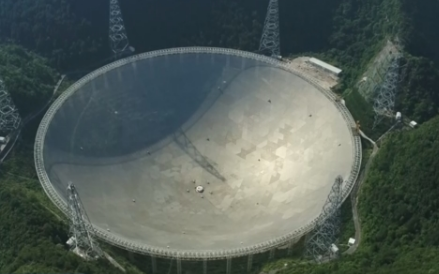
Thanks to persistent efforts from Chinese research teams, FAST was completed and commissioned in 2016. To date, the telescope has discovered 1,284 pulsars. This figure exceeds the total number of pulsar discoveries made by all other international telescopes combined over the same period. It has generated massive core raw data for humanity to study cosmic evolution and physical laws governing extreme celestial bodies. China’s radio astronomy has achieved a fundamental shift: from relying on foreign data to independently producing core research data.
China keeps making breakthroughs in major science and technology infrastructure, reaching toward both the macro cosmic scale and the micro material world.
Recently, the High-Intensity Heavy-Ion Accelerator Facility (HIAF), a national major science and technology infrastructure located in Huizhou, Guangdong, passed process acceptance and entered trial operation for scientific research.
Heavy‑ion physics is a frontier discipline for probing atomic‑nucleus structures and uncovering extreme microscopic laws of matter. It also underpins cross-field research including fundamental nuclear physics and biomedicine.

In the past, China’s heavy-ion research mainly relied on the Heavy Ion Research Facility in Lanzhou. Restrained by early-stage technical limits and construction backgrounds, the facility could only support a limited range of extreme experiments. To fill this gap, China took forward-looking steps to build the new‑generation HIAF. After 16 years of collaborative research, the project team realized domestic independent control over key equipment and core software. Beam intensity, experimental resolution, operational stability and multi-scenario experimental capacity have achieved leap-forward improvement. A brand-new domestic platform targeting micro-scale nuclear physics research has been established.
“HIAF serves as a fine example of the new-type nationwide system for mobilizing resources. It fully integrates financial strengths, technological edges, platform resources and talent advantages in the Greater Bay Area. Such multi-party collaboration strongly supports China’s pursuit of sci-tech self-reliance,” said Hu Zhengguo, Party Secretary and Deputy Director of the Institute of Modern Physics, Chinese Academy of Sciences.
Over the past five years, construction of China’s large-scale scientific facilities has accelerated rapidly. More than 65 such facilities are completed or operational nationwide. Four distinctive facility clusters have taken shape in Huairou (Beijing), Zhangjiang (Shanghai), Hefei (Anhui) and the Guangdong-Hong Kong-Macao Greater Bay Area. They deliver critical research platforms for domestic scientists.
Large facilities shall excel not only in construction but also in practical application
At the beginning of this century, China only possessed first- and second-generation synchrotron radiation facilities with limited performance. Research capacity was severely constrained. Researchers often missed valuable research opportunities due to scarce experimental resources, and plenty of original ideas could not be put into practice.
“Researchers had to apply for beam time at overseas facilities for key experiments. Application cycles usually lasted at least half a year. Many experiments simply could not be carried out,” said Tao Ye, Deputy Director of the Beamline Division at the High-Energy Photon Source (HEPS).
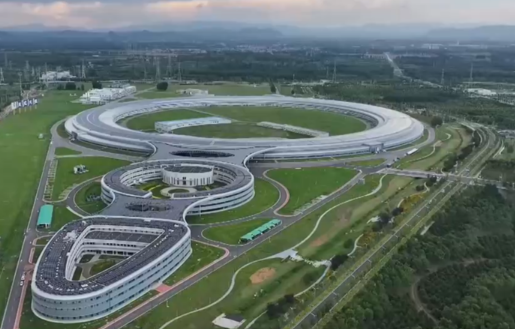
Today in Beijing Huairou Science City, the fourth-generation HEPS entered trial operation at the end of 2025. It has supported more than 400 research groups to conduct experimental projects. It helps tackle tough challenges such as defect detection on aero-engine blades and in-situ analysis of charge-discharge processes in new-energy batteries. Through ongoing projects, operators have explored a development model balancing research priorities with industrial-oriented applications.
“The development of China’s synchrotron radiation light sources closely mirrors national strength growth. The first- and second-generation facilities addressed the question of availability. The third-generation ones delivered reliable performance. The fourth-generation HEPS pursues world-leading capabilities. During trial operation, HEPS has demonstrated huge potential for aerospace, energy materials and devices, catalysis and chemical engineering, biomedical imaging and integrated-circuit characterization. It will strongly underpin and boost China’s basic research and industrial innovation,” Tao Ye explained.
Chinese radio astronomy has transformed from using outdated foreign datasets to world-leading observations delivered by FAST. Heavy-ion research has moved past constrained experimental conditions empowered by HIAF. Micro-scale scientific work no longer suffers from resource shortages thanks to successive generations of synchrotron light‑source platforms. Upgrading of these giant national-grade facilities vividly illustrates China’s leap in sci-tech innovation: moving from following others, to running abreast of global peers, and then taking the lead.
Statistics show China’s total domestic research and development (R&D) spending rose from RMB 1 trillion in 2012 to nearly RMB 4 trillion in 2025, ranking second globally. Between 2012 and 2025, China climbed from 34th to 10th in the Global Innovation Index. Its science and technology sector has achieved a historic shift from technological followers to major global contributors.
A new round of global scientific-technological revolution and industrial transformation is gathering pace, accompanied by fiercer international sci-tech competition. China’s large-scale scientific facilities have formed a systematic layout featuring open shared access. On the new journey toward higher scientific goals, these giant national-grade facilities across the country keep releasing original-innovation momentum and serve as solid cornerstones for building a world-leading science and technology power.