
As a national pioneer in low‑altitude economy development, Shenzhen is leveraging its robust electronic‑information industrial base, policy innovations and abundant urban application scenarios to propel low‑altitude industries from technical validation toward large‑scale commercial operation, emerging as a key driver of the city’s new‑quality productive forces.
Home to one of China’s densest low‑altitude industrial clusters, the city hosts more than 500 related enterprises in Nanshan District and over 200 market players in Qianhai. The industrial chain covers aircraft manufacturing, flight‑control systems, battery materials, air‑space operation, digital infrastructure and scenario‑based services. Leading firms including Da‑Jiang Innovations (DJI), Autel Robotics and Zero Gravity Aircraft Industry (Hefei) Co., Ltd. (ZeroG) Aviation are clustered locally. Electric vertical take‑off and landing (eVTOL) manufacturing plants and integrated airspace demonstration bases have been put into use, forming an integrated system for research and development (R&D), production, testing and commercial deployment. Shenzhen has opened over 300 drone logistics routes with hundreds of thousands of annual flight missions. Passenger‑carrying general‑aviation flight volumes rank among the nation’s top, with low‑altitude industrial value‑added maintaining an annual growth rate of around 30 percent.
Forward‑looking institutional frameworks remove industry bottlenecks. Shenzhen enacted China’s first special local regulation targeting the low‑altitude economy, alongside supporting incentive rules covering aircraft airworthiness certification, route operation and infrastructure construction. Local authorities have led or participated in drafting more than 30 industrial standards. Districts including Yantian, Longgang and Qianhai have rolled out tailored support policies. A digital low‑altitude air‑traffic management platform enables route planning, real‑time flight monitoring and risk early warning to secure flights in complex megacity environments. The Hong Kong‑Shenzhen‑Macao Low‑Altitude Economy Industry Alliance in Qianhai facilitates rule alignment and resource sharing across the Greater Bay Area, piloting cross‑bay logistics and commuter services alongside supporting businesses such as low‑altitude‑flight insurance.
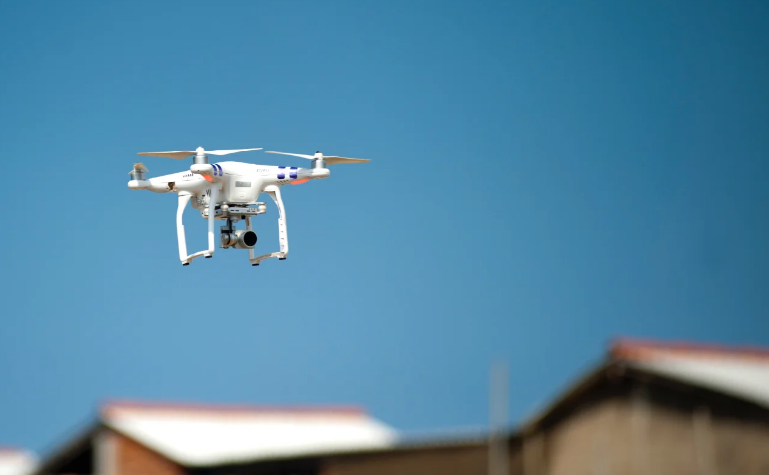
Real‑world use cases keep expanding. Drones perform urban on‑demand delivery, hospital sample transportation, power‑grid inspection, maritime monitoring and emergency response. eVTOL sea‑platform material delivery and offshore patrol missions have boosted marine operational efficiency. Test flights for air‑taxis are underway together with air‑rail intermodal transport and low‑altitude cultural‑tourism projects. The country’s first integrated air‑space demonstration base in Yantian has finished main‑structure construction, offering one‑stop trial‑flight, pilot‑production and incubation services. Longgang completed China’s first public‑data transaction for the low‑altitude sector, unlocking the commercial value of low‑altitude data elements.
Industry‑university‑research collaboration accelerates innovation combining low‑altitude applications with AI for intelligent perception and computing‑network technologies. According to local plans, Shenzhen will scale up vertiports, low‑altitude surveillance radars and communication networks, build industrial parks and thousands of vertiport sites by the end of 2026, and expand commercial scenarios such as passenger commuting, cross‑border logistics and low‑altitude tourism. The city aims to build itself into a global hub for low‑altitude‑economy headquarters, R&D, high‑end manufacturing and solution provision.
Industry observers note that China’s low‑altitude economy has shifted from isolated technological competition toward full‑ecosystem rivalry. Though Shenzhen holds early advantages from manufacturing capacity, policy innovation and megacity scenarios, challenges remain in refined air‑space governance, airworthiness frameworks and viable profit‑making models. As infrastructure improves and operating costs decline, the trillion‑yuan‑scale low‑altitude sector will open a new three‑dimensional growth track for the Greater Bay Area.