
SpaceX is set to launch its Starship vehicle on its 14th flight, designated Flight 14, from Starbase in Texas on September 28th, 2026, in what will be the vehicle’s first attempt to reach Earth orbit. The Federal Aviation Administration (FAA) issued the launch license on September 26th, clearing the way for the mission after a successful wet dress rehearsal was completed earlier in the week. The mission represents a critical transition for Starship from suborbital testing to operational orbital flight, carrying its first meaningful payload and marking the longest flight in the program’s history.
The primary objectives of Flight 14 differ fundamentally from the previous 13 test flights. While earlier missions kept the upper stage on a suborbital trajectory to ensure controlled reentry, this flight will attempt a full orbital insertion at approximately 275.00 kilometers, where the vehicle will complete about six orbits over a period of nearly 10.00 hours. The Starship upper stage will deploy 26 Starlink V3 satellites, the first operational payload carried by the vehicle. The Super Heavy booster will perform a controlled splashdown in the Gulf of Mexico, while the ship will execute a deorbit burn before splashing down in the Pacific Ocean west of Chile.
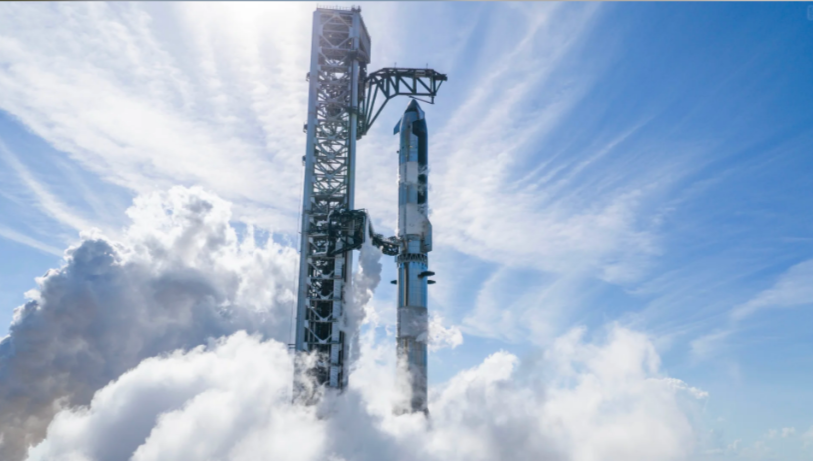
The mission incorporates several hardware and software improvements based on lessons from earlier flights. SpaceX addressed engine relight issues observed during Flight 13 by upgrading the booster’s filtration system and refining engine restart reliability logic. The Starship upper stage will also test heat shield enhancements, including additional tile retention mechanisms and a curved tile design intended to reduce heating in gaps between tiles. Three of the Starlink V3 satellites are equipped with cameras to photograph the spacecraft’s exterior tile surface after separation, gathering critical data for future reentry.
Despite the milestone nature of the flight, significant risks remain. Flying to orbit removes the safety net of a guaranteed suborbital return, and the mission includes a planned 20.00-minute hold after main engine cutoff to confirm all guidance and landing systems are functioning correctly before committing to the orbital insertion burn. The booster also did not attempt a return-to-launch-site catch by the launch tower’s “chopstick” arms, instead performing a soft splashdown at sea. As SpaceX Communications Manager Dan Huot stated, the mission marks “a pretty cool milestone” and the beginning of “the next phase of developing Starship to be fully and rapidly reusable”.