
A renewed rally in global crude prices is reviving inflation risks across energy-importing nations, forcing central banks to keep interest rates higher for longer and clouding the outlook for household spending and industrial margins, according to the latest commodity and macroeconomic data.
Brent crude has climbed toward 116 dollars per barrel in late October, supported by tighter supply from major oil-producing nations and renewed geopolitical risks in key shipping corridors. Market analysts note that the price uptick is already feeding into fuel, transport and petrochemical costs, with knock-on effects for food distribution and manufacturing inputs.
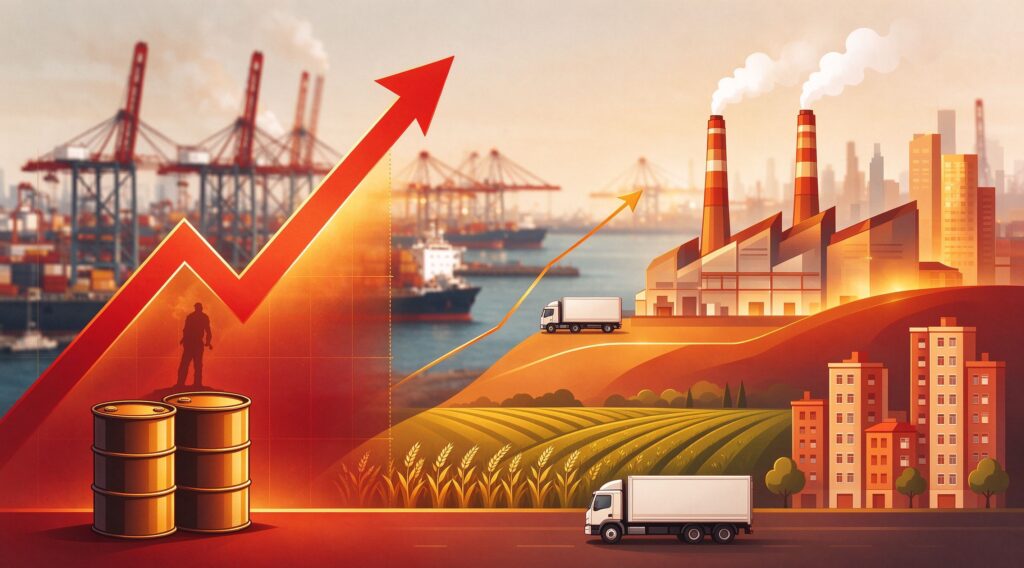
The International Monetary Fund October World Economic Outlook flagged energy costs as one of the biggest upside risks to its inflation projections. The fund estimates global headline inflation will reach 4.7 percent this year, well above many central bank targets, before edging down to 4.1 percent in 2027. Growth is forecast to slow to 3.1 percent in 2026, as higher energy bills squeeze disposable income and curb corporate investment.
European economies are among the most exposed. Flash data showed euro-area inflation picked up to 3.8 percent in September, driven largely by energy and service price gains. Policymakers at the European Central Bank have signalled they are not ready to begin rate cuts until there is clear, sustained evidence that underlying price pressures are cooling.
In Asia, countries with limited domestic energy resources face a double burden – weaker trade demand in some export sectors and larger import bills for oil and gas. Fiscal authorities in several emerging markets are reviewing targeted subsidy schemes to shield low-income households from steep fuel price increases, while trying to avoid widening budget deficits.
For oil exporters, the price rebound has strengthened fiscal revenues and current account balances, though officials warn against over-reliance on volatile hydrocarbon income. Many resource-rich economies continue to push for diversification into agriculture, tourism and manufacturing to reduce long-term commodity dependence.
Economists warn that the path of inflation will remain sensitive to oil market developments. If supply disruptions push crude even higher, the global economy could face a period of slower growth paired with stickier inflation, a stagflationary scenario that would complicate monetary policy planning well into next year.