
Chinese firms expand global footprint in energy storage
The world is accelerating the green energy transition, and energy storage is embracing enormous market opportunities.
Recently, many Chinese energy storage companies have announced overseas project orders, covering Europe, Latin America, the Middle East and other regions. According to the China Energy Storage Alliance (CNESA), Chinese energy storage enterprises recorded 366 GWh of new overseas orders in 2025, a year-on-year increase of 144%.
While orders are surging, new policy developments have drawn wide attention in the energy storage industry. From April 1st, 2026 to December 31st, 2026, China will reduce the value-added tax (VAT) export rebate rate for battery products from 9% to 6%. Starting January 1st, 2027, the VAT export rebate for battery products will be abolished completely.
Faced with robust market demand on one side and the phasing-out of industry subsidies on the other, how are Chinese energy storage firms adapting to the new environment and continuing to expand the global energy storage market?
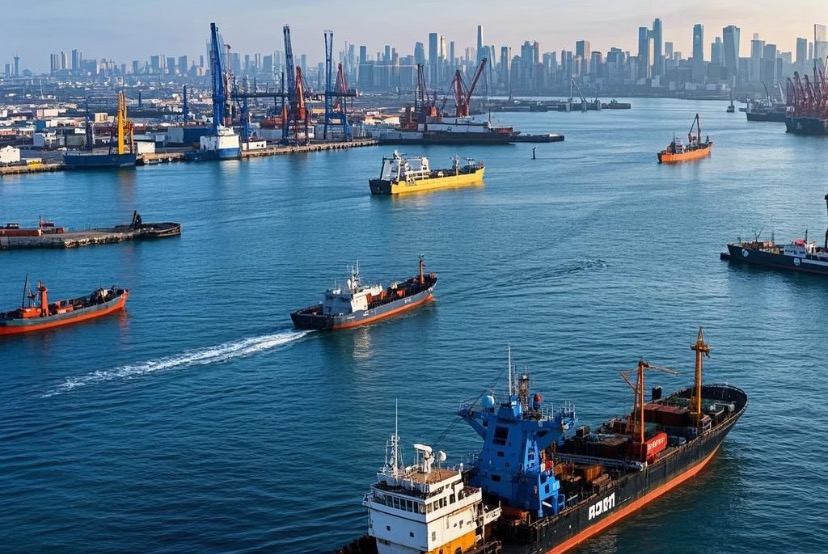
Accelerated global expansion: Overseas orders surge for Chinese energy storage firms
In March, the 2026 Solar Solutions Amsterdam was successfully held in Amsterdam, the Netherlands. “During the exhibition, we signed energy storage system supply agreements with two major core European partners, with a combined scale of 600 MWh. Meanwhile, LONGi Energy Storage solutions secured their first order in Germany, marking a substantial breakthrough for the company in key European markets,” said She Haifeng, Vice President of LONGi Green Energy.
Since the beginning of this year, several Chinese energy companies, including LONGi Green Energy, have successively announced large-scale overseas cooperation deals. In March, Hithium signed a letter of intent with the Spanish government, planning to invest about 400 million euros to build a large-scale manufacturing base for batteries and energy storage systems. In February, Sungrow announced plans to invest approximately 230 million euros in its first manufacturing plant in Europe, with an annual capacity of 20 GW PV inverters and 12.5 GWh energy storage systems. Earlier this year, CALB signed an investment contract with the Portuguese government to build a lithium-ion battery factory locally.
Looking back, China’s energy storage global expansion already saw explosive growth last year.
Data from CNESA shows that Chinese energy storage firms registered 366 GWh of new overseas orders in 2025, up 144% year on year, with a concentrated surge in the second half of the year. By region, Australia, the United States, Saudi Arabia and Chile rank top four in order volume, with Australia taking a clear lead.
In terms of growth rate, emerging markets including the Middle East, South America and Southeast Asia are unlocking strong potential, becoming new engines driving order growth. More than 70 Chinese energy storage enterprises have gone global, achieving full industrial chain coverage, with battery manufacturers remaining the main force. Demand is rapidly rising in special application scenarios such as data centers, mine microgrids, ports and islands. Long-term service agreements have become standard practice, and joint overseas expansion models have increased significantly.
The strong momentum of China’s energy storage going global has attracted high attention at home and abroad. A Reuters report released late last year stated that China’s power market reform is reshaping the economic benefits of domestic energy storage. Amid growing demand for energy storage in overseas markets, Chinese energy storage manufacturers have achieved explosive growth and further consolidated their leading position.
Cosimo Ries, an analyst at a policy research and consulting firm, noted that top Chinese energy storage enterprises have nearly full order books, and many factories have adopted two-shift operations to meet the booming demand.
“Judging by the overall scale, 2025 is truly a breakout year for China’s energy storage going global.” said Chen Haisheng, Chairman of the China Energy Storage Alliance and Director of the Institute of Engineering Thermophysics, Chinese Academy of Sciences.