
On a spring day in 2026, a less than 40-square-meter bead craft studio on Quancheng Road Commercial District in Jinan was packed with customers. Young consumers bowed their heads, focusing on embedding colorful plastic beads into templates, with soft “click” sounds echoing constantly. This craft, originating in Sweden and once used for elderly rehabilitation training, is now stitching together a nearly 1 billion yuan emerging market in China under the name of “emotional consumption”. Data shows that sales of bead craft products on major e-commerce platforms reached 291 million yuan in 2025, a year-on-year surge of 900%; during the 2026 Spring Festival holiday, Gen Z’s group-buying orders for bead crafts on Douyin soared by 9018% year-on-year, making it the “traffic king” in the handmade consumption category.
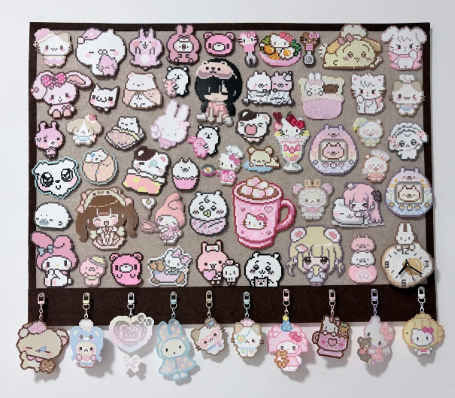
Behind this upsurge lies the profound transformation of consumer demand from material satisfaction to emotional value. With its core advantages of low threshold and high sense of achievement, bead crafting precisely meets the stress-relief needs of contemporary young people – no professional skills required, and a personalized work can be completed in 1-2 hours. This certain experience of “reward for effort” has become a “healing tool” to combat anxiety. The consumer group presents distinct characteristics: women aged 31-40 account for over 70%, among which mother groups form the main force of parent-child consumption. Meanwhile, the Gen Z group is rising rapidly, promoting bead crafting to extend from children’s handiwork to adult stress-relief scenarios. The boost from social platforms has further amplified its popularity: The topic “I’m Addicted to Bead Craft” on Xiaohongshu has accumulated over 7.4 billion views, and related topics on Douyin have exceeded 2.3 billion plays. Bead craft works have become a “social currency” for young people to showcase their individuality.
While online consumption is booming, offline formats are expanding rapidly to form two-way empowerment. The number of bead craft experience stores in cities such as Shanghai and Shenyang has increased by over 200% year-on-year, and the “29.9 yuan per hour” experience package has become a “traffic-generating experience unit” in commercial complexes. A chain bead craft brand store in Fuzhou recovered its investment within a month of opening, with daily customer flow exceeding 100 during holidays and monthly turnover stabilizing at 80,000-90,000 yuan. The low threshold is a key driver for offline expansion – excluding rent, a store can be opened with 50,000-80,000 yuan, attracting a large number of entrepreneurs. Over 20 similar stores have gathered in Kuanhouli Commercial District in Jinan, and the market in Changsha has exceeded 100. The upstream supply chain has kept pace: manufacturers in Yiwu have achieved full coverage of more than 300 colors, with a maximum daily output of millions of beads, and the price of raw materials has dropped from 65 yuan per catty to around 20 yuan, further lowering the industry threshold.
However, behind the explosive growth, hidden worries in the industry have gradually emerged. Safety issues are paramount: some low-cost products use recycled plastic, which may release harmful substances such as formaldehyde when heated. The problem of supporting irons exceeding the 220V safe voltage standard is widespread. Accidents such as electric shock of a young girl in Guiyang and scalding of a child in Shanxi have sounded the alarm for the industry. The new version of the National Standard for “Toy Safety”, to be implemented in November 2026, will include 10 types of harmful substances in regulation for the first time. It is expected to increase the testing costs of small and medium-sized manufacturers by 30%-50%, and nearly 80% of non-compliant products will face elimination risks. Market involution is also intensifying: stores in some cities have fallen into price competition, with daily experience fees as low as 29 yuan. Some stores in Jinan need an average of 25-30 daily customers to maintain a balance of payments, and the single hourly charging model is encountering growth bottlenecks. In addition, the industry’s dependence on external IPs is as high as 90%, with insufficient original design capabilities. Coupled with the risk of consumers’ fading freshness, the market is worried that it will repeat the fate of plaster dolls and fluid bears, which “failed to last more than two years”.
Facing the test of the “Internet celebrity destiny”, the industry is exploring ways to break through from multiple dimensions. On the product side, there is an upgrade towards three-dimensionalization and functionalization: practical works such as vases and lampshades have emerged, and special materials such as temperature-sensitive and luminous beads are gradually popularized. Scene integration continues to deepen: Haidilao has set up bead craft experience areas in waiting areas, and Anhui Qimen Cultural Tourism Complex has launched black tea-themed bead craft projects, realizing cross-border integration of “bead craft + catering” and “bead craft + cultural tourism”. Business models are also innovating: some brands are trying a diversified model of “material package sales + offline experience + customized finished products”. “Bead crafting on behalf of others” has emerged, with the price of crafting a 15cm square work only 34 yuan, meeting different consumer needs. Policy guidance is also crucial: the document issued by the General Office of the State Council supporting “emotional and experiential services” provides top-level support for the expansion of offline formats, while tighter supervision is forcing the industry to transform in a standardized manner, accelerating the withdrawal of small workshops from the market.
Industry experts point out that the bead craft economy is standing at the crossroads of transforming from an “Internet celebrity hit” to a “long-lasting category”. Data from the China Toy and Juvenile Products Association shows that the current qualification rate of soft plastic toys is only 23%. Reconstructing safety trust, breaking through core innovations, and upgrading business models have become the three major barriers that the industry must cross. Professor Zhao Haichuan from Shandong University believes that the core competitiveness of bead crafting lies in its emotional value and scene embedding ability. In the future, it is necessary to shift from relying on external IPs to cultivating original designs, and from simple experiences to in-depth theme development to achieve sustainable development. In the short term, industry reshuffling is inevitable, but in the medium and long term, if standardized transformation and innovative upgrading can be completed, this small bead is expected to settle into a stable niche category in the handmade track, continuously releasing the market potential of emotional consumption.