
A major geological exploration breakthrough has been announced by a joint research team including the Institute of Geology and Geophysics, Chinese Academy of Sciences and the Heilongjiang Bureau of Geology and Mineral Resources. The world’s first permafrost-dissociated rare earth mine has been discovered in the permafrost belt at the border of Heilongjiang and Jilin provinces in Northeast China. The groundbreaking discovery overturns the traditional mineralization theory of rare earth resources and fundamentally changes China’s long-standing rare earth resource pattern featured by light rare earths in the north and heavy rare earths in the south. It is expected to reshape the global strategic rare earth resource landscape.
A new type of high-quality mineral resource formed by permafrost evolution
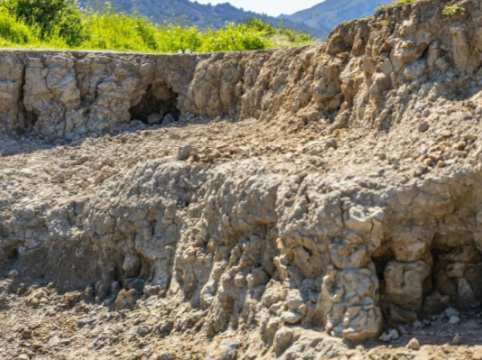
The new deposit is formed by millions of years of freeze-thaw cycles in high-latitude permafrost regions. Alkali granite in the area is naturally weathered into loose sand and soil through repeated frost heave and thawing. Rare earth elements exist stably in the form of independent minerals such as monazite and xenotime, which can be exploited via open-pit mining without blasting and crushing operations.
Covering an area of over 1,000 square kilometers, the mine boasts huge resource potential. Its prospective reserves are 1.2 to 1.5 times those of China’s southern ion-adsorption rare earth mines. Notably, the deposit is enriched in both light and heavy rare earths. It contains light rare earths widely used in new energy vehicles and wind power equipment, as well as high-value heavy rare earths including dysprosium and terbium that are indispensable for national defense, military industry and high-end manufacturing. The discovery breaks the inherent geographical division of rare earth resources in China and makes Northeast China a core production base for heavy rare earths.
Revolutionary green mining with great cost advantages
Different from traditional southern ion-adsorption rare earth mines that rely on chemical leaching, produce pollutants and feature high costs and low recovery rates, the newly discovered permafrost-type mine adopts a full-physical mining process, realizing a revolutionary upgrade in mining technology.
The whole production process only includes screening, water washing and magnetic separation, requiring no chemical agents and achieving nearly zero wastewater discharge. It completely eliminates the risk of groundwater pollution and vegetation damage, fully meeting green mine construction standards. Meanwhile, the mining cost is reduced by more than 60% compared with traditional mines, dropping to 30,000 to 35,000 yuan per ton. The resource recovery rate exceeds 92%, far higher than that of traditional mines, maximizing the utilization efficiency of strategic resources.
Reshaping the global rare earth supply and pricing pattern
The discovery brings a strategic upgrade to China’s rare earth industry system. It ends the long-term risk of relying solely on southern regions for heavy rare earth supply, forming a coordinated development pattern of “high-end purification in the south and green production in the north”. This dual-core supply system greatly enhances the security of China’s strategic resource supply chain and injects new impetus into the industrial revitalization of Northeast China.
On the global stage, western countries have been promoting the “de-Chinaization” of the rare earth supply chain in recent years. The new Northeast China rare earth mine, with its low cost, eco-friendly production and stable large-scale supply, greatly weakens the economic competitiveness of newly built rare earth production capacity overseas. It further consolidates China’s dominant position in global rare earth refining and technological research and development, and strengthens China’s voice in global rare earth pricing and resource allocation.
Future outlook
Researchers stated that the team will accelerate detailed exploration of the mining area and optimize supporting mining and beneficiation technologies, with a pilot mining project scheduled to launch within this year. In the future, the new permafrost-dissociated rare earth mine will form a complementary advantage with traditional southern rare earth mines, helping China transform from a major rare earth country to a powerful rare earth country and providing long-term and stable resource support for the global new energy industry, high-end manufacturing and national defense technology development.