
The lines between the internet and automotive industries are blurring faster than ever. In a significant development this week, Chinese tech behemoth ByteDance (owner of TikTok and Douyin) has formally entered the smart car arena through a strategic partnership with automaker Seres, signaling a major shift toward “artificial intelligence (AI)-defined vehicles”.
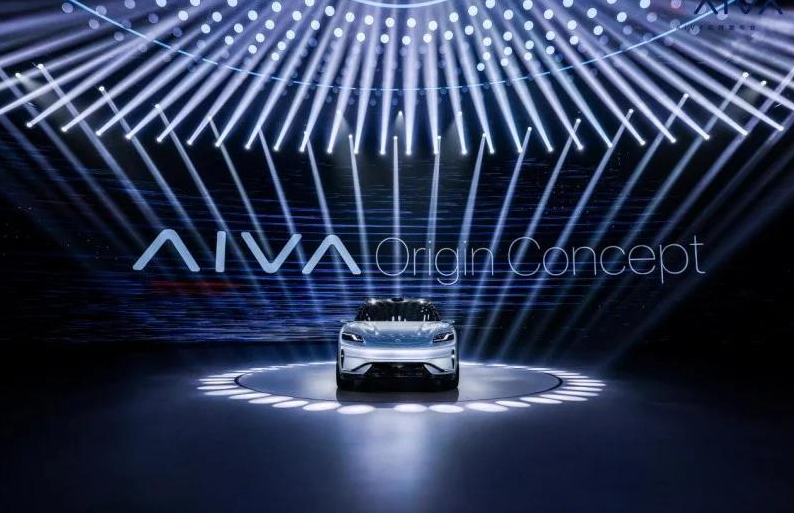
On June 9th, Seres-backed SaiDou Technology unveiled its new automotive brand, Artificial Intelligence Vehicle Assistant (AIVA) , in Beijing. Positioned as an explorer of “AI-defined vehicles”, AIVA will utilize ByteDance’s Volcano Engine to embed the Doubao large model directly into its vehicles.
Unlike traditional luxury electric vehicles (EVs), AIVA targets the mass market with “full-stack” AI: continuous voice dialogue, multi-modal interaction, and autonomous learning capabilities. For ByteDance, this is a strategic move to push its generative AI from the consumer-end (C-end) into high-value business-end (B-end) industrial applications.
However, this “second battlefront” strategy has complex undertones. Seres is famously known for its deep partnership with Huawei under the Automotive Intelligent Technology Organization (AITO) brand, which has delivered over one million vehicles. Industry analysts suggest that Seres is leveraging its existing manufacturing lines to create a more affordable, AI-centric brand independent of Huawei’s ecosystem, while ByteDance secures a foothold in smart cockpits-a market with an 83% penetration rate in China.
From chatbots to lab assistants
The pivot to application extends beyond the highway. In Beijing, the AI revolution is transforming the very fabric of scientific discovery.
The Beijing Academy of Artificial Intelligence (BAAI) unveiled that AI is moving “from the digital world to the physical world.” Researchers have successfully deployed an “AI-powered” dual-beam electron microscope (Hyper-FIB, short for Hyper Focused Ion Beam). Previously, preparing micro-nano material samples required engineers to stare at a screen for up to three hours, relying on instinct. Now, the AI handles positioning and cutting autonomously for over eight hours, boosting success rates from manual levels to over 90%.
Furthermore, the “self-evolving” dark labs are removing humans from hazardous loops. These AI-robot combinations can now perform complex chemical detections, such as acrylonitrile testing, autonomously. By using reinforcement learning, the AI can identify the correct formula after a few attempts and replicate it perfectly, eliminating the risk of human error in high-stakes environments.
A national strategy
This week’s news highlights a broader national trend. According to provincial “15th Five-Year Plan” documents, AI and computing power are the top priorities across all 31 provincial regions. While Beijing focuses on foundational models and Shanghai on chips, the industry is forming a “one chess game” strategy where tech giants like ByteDance and Alibaba provide the “brains” for traditional manufacturing, and local governments provide the computing power.
As traditional boundaries between software, hardware, and heavy industry dissolve, China’s tech sector is clearly betting that the next “iPhone moment” won’t be a phone-it will be an AI agent driving a car or running a lab.