
As the Dragon Boat Festival holiday draws near, Ma Da, operator of a surfing club in Wanning, Hainan, puts forward an invitation. “Surf in the morning, work out in the afternoon, and sing and dance together in the evening.” Meanwhile, Ge Tan, who runs a stand-up paddleboarding (SUP) club in Beijing, calls on people to escape the sweltering city. He suggests heading to the mountains and waters of Chengde with kids, to enjoy drifting and explore the underwater Great Wall. One group chases waves on an island, while another ventures into mountains and water. Outdoor sports are redefining people’s holiday getaways.
The boom of hiking, water sports and other outdoor activities is no longer limited to holidays. Outdoor elements have quietly become part of daily life across China. On the ground floor of many major shopping malls, outdoor sport brands have gradually replaced international beauty and fast fashion labels to occupy prime retail spaces. Data from Winshang Big Data, which tracked 600 shopping malls nationwide over the past three years, shows that the share of outdoor sport brands on mall ground floors rose by 114.35% in 2025 compared with 2023.
“Outdoor sports have evolved from a niche hobby for a few travelers to a daily activity enjoyed by growing numbers of people,” said Jiang Yiyi, Dean of the School of Leisure Sports and Tourism at Beijing Sport University. In May, Beijing Sport University and Meituan Research Institute jointly released the Report on the Development and Trends of Outdoor Sports Consumption: From Niche Experience to Mainstream Lifestyle (hereafter referred to as the Report). According to the document, China saw over 8 billion outdoor sports consumption visits in 2025, with total consumption exceeding 1 trillion yuan.
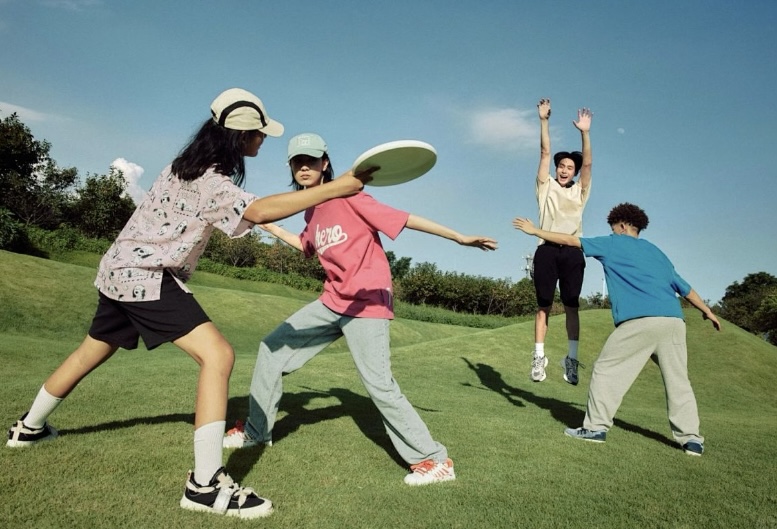
What drives the popularity of outdoor sports
This booming market did not emerge by chance. Jiang Yiyi attributes its rapid growth to three interacting factors: policy support, consumption upgrading and shifting public attitudes.
A series of official documents have guided the industry’s development, including the Outdoor Sports Industry Development Plan (2022-2025) and the Action Plan for Promoting the Construction of Outdoor Sports Facilities and Improving Services (2023-2025). Per the Report, the number of outdoor sports merchants registered on Meituan increased from 27,000 to 34,000 between 2024 and 2025. By 2025, China had 335,000 enterprises related to outdoor sports. Public infrastructure has also improved steadily. New facilities include ice and snow sports venues, fitness trails, self-driving camps, as well as sailing and yacht berths. Among the first batch of 49 high-quality outdoor sports destinations, the number of scenic spots grew by 150.96%, and outdoor sports merchants increased by 25.21%.

Changes on the consumer side are equally striking. The market size of China’s sportswear sector reached 598.9 billion yuan in 2025. Short-video platform Douyin recorded 576 billion views on content related to outdoor sports. Outdoor sports have developed into a comprehensive consumption system covering production, services, content creation and on-site experience, rather than isolated single activities.
Ma Da has witnessed the whole transformation. Starting out as a surfing coach, he now runs a travel company offering one-stop services, ranging from single surfing lessons to island summer camps. “Tourists no longer prefer superficial sightseeing. They hope to learn new skills and stay longer by the sea.” he said. “Ordinary travel has turned into sports-themed trips, lifestyle choices and even long-term stays.”
“People take part in outdoor activities not just for exercise. They seek relaxation, social interaction, mental healing, self-expression and inner connection.” Jiang Yiyi noted. Many niche outdoor sports gained momentum during the pandemic three to four years ago, reflecting people’s rising attention to physical and mental well-being. “People now pursue better quality of life instead of simply meeting basic needs.” she added.
Unlike traditional elite sports, emerging outdoor activities feature flexible rules and low entry barriers. Examples include disc golf and pickleball. “Pickleball lowers the technical threshold of tennis. New learners can get the hang of it in just half an hour, which greatly boosts public interest.” Jiang Yiyi explained. Outdoor sports stand out for their lifestyle, fashion and social attributes. They attract a wide range of participants, including women, seniors and children. Content sharing platforms such as Xiaohongshu and Douyin further fuel their popularity. A complete consumption chain has taken shape: users get inspired online, try activities offline, complete transactions on platforms and share their experiences afterward.
Major consumer groups of outdoor sports
The Report divides outdoor sports into five categories: ice and snow sports, mountain sports, land sports, water sports and aviation sports. Each category has distinct consumer traits, and the whole sector features refined participation, regular engagement and diverse participant groups.
Land sports stand out as the mainstream choice thanks to low barriers, high participation frequency and strong social functions. Go-karting accounts for 41.87% of related consumption, camping 24.34% and trampoline activities 14.26%. Ice and snow sports have evolved from seasonal trials into a regular lifestyle. Skiing dominates this category, taking up 91.61% of consumption. Niche mountain sports such as cross-country trekking, orienteering and bungee jumping have gained wide popularity. Water sports keep attracting visitors with waterfront scenes, and drifting makes up 77.90% of its consumption. As a high-end niche sector, aviation sports including paragliding, skydiving and helicopter experiences maintain stable market demand.
Consumer groups have also become more segmented. Young and middle-aged adults as well as women form the backbone of the market. Per the Report, people aged 20 to 44 are the core consumers, and female participants account for 54.65% of the total.
Ma Da’s customer base mainly consists of urban office workers and freelancers aged 25 to 40, most of whom are women. Many visit just to take nice photos. Most male customers are over 40. They have ample time and money, and focus on improving sports skills to fulfill past regrets.
“Rising self-awareness and changing views on marriage and relationships encourage women to pursue life experiences they truly want.” Ma Da said. Free from traditional stereotypes, modern women embrace outdoor sports to unwind and enrich daily life.
For urban dwellers, outdoor sports have become an outlet to relieve stress. Hiking to watch sunsets, surfing by the sea and offline gatherings help people step away from work pressure. Ma Da’s club regularly organizes offline events and builds online communities. A single activity can draw around 20 to 30 participants. Many outdoor enthusiasts now try different activities across seasons. Some go surfing in summer and skiing in winter.
Ge Tan runs businesses covering SUP and skiing, catering to this seasonal trend. Most SUP lovers are young urban white-collar workers and women, who come mainly for leisure and social media photos. Professional photography services can greatly boost customer appeal. Few of them aim to master advanced skills.
Skiing has a clearer participant hierarchy and a wider age range. Students and new employees tend to choose low-cost ski resorts near Beijing, rather than resorts in Chongli, Hebei Province. Middle-aged and senior enthusiasts, together with family visitors, form the stable customer base of Chongli ski resorts. More than one-third of skiing learners choose to take advanced courses after initial experiences.
Hidden challenges amid the boom
Despite the thriving trend, the outdoor sports industry also faces prominent challenges.
Jiang Yiyi stresses the priority of safety for sustainable development. She cited the 2021 Baiyin Yellow River Stone Forest Mountain Marathon accident and the cliff swing accident in Huaying in May this year as warnings. Operators must put safety first in daily operations. She also warned against blind investment and industry bubbles. “Market players should avoid following the trend blindly. It is vital to develop featured and differentiated businesses.”
Frontline operators have already encountered practical troubles. In Riyue Bay of Wanning, where Ma Da’s club is located, a sharp rise in surfing clubs has led to severe homogeneity and cut-throat price competition. To avoid low-end rivalry, Ma Da combines surfing with functional fitness training and sticks to premium services. He believes customers attracted by cheap promotions will not make repeat purchases. Quality and reputation are the keys to long-term growth.
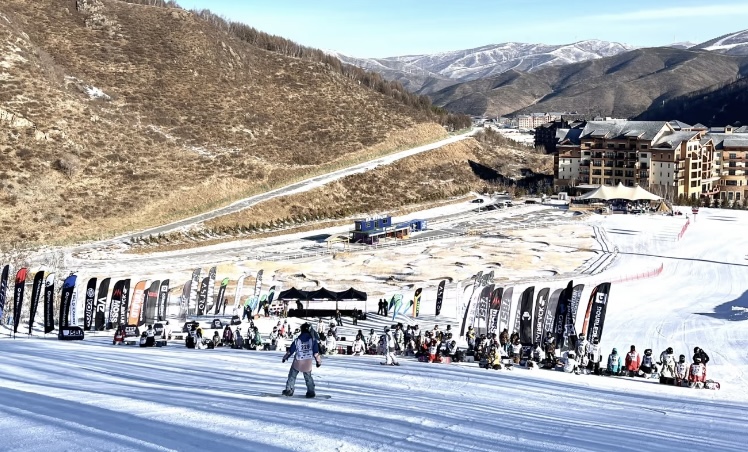
Ge Tan faces deeper problems: limited access to venues and insufficient public safety awareness. China has improved outdoor infrastructure in recent years. New transport links such as the Beijing-Zhangjiakou Expressway and the Beijing-Zhangjiakou High-speed Railway have boosted the ski industry in Chongli. Some scenic spots have also upgraded safety facilities for outdoor activities. Even so, public natural resources remain restricted in most cities. Many waters are contracted to private operators and closed to ordinary visitors. In developed countries for outdoor sports, most waters are open to the public, with governments focusing on ecological protection and safety guidance. In addition, the immature national event system also causes fluctuations in the industry’s development.
Tang Ruihong, an experienced outdoor enthusiast who has tried skydiving, white-water kayaking and skiing, points out the lack of safety awareness among participants. Most overseas outdoor activities require official certificates, supported by comprehensive safety education systems. In China, excessive protective management weakens people’s ability to judge risks. “People get used to being fully protected and lack the awareness that everyone is primarily responsible for their own safety,” Tang said. She suggests the industry improve regulations through association training and insurance mechanisms, instead of simply imposing bans.
Ge Tan holds a neutral view on the popular “check-in style” outdoor experiences. It is natural for people to try trending activities for fun. However, to sustain long-term development, the industry needs better policy support, sound community operation and complete event systems. Only by addressing existing shortcomings and abandoning extensive development can China’s outdoor sports boom achieve genuine maturity and sustainability.