
China’s State Council has rolled out plans to speed up the development of a national computing power network, grouping it alongside water supply networks, upgraded power grids, next-gen communication networks, urban underground pipeline networks and logistics networks as six key national new infrastructure systems. The National Development and Reform Commission (NDRC) estimates that total investment in the six networks and their supporting industrial chains will top 7 trillion yuan in 2026, making computing infrastructure a core driver for stabilizing investment and fostering new productive forces powered by artificial intelligence (AI).
Surging AI demand spurs the rollout of an integrated national computing network
Driven by booming large language model development, domestic demand for computing power has exploded. Official data shows China’s daily Token calling volume surpassed 1.4 quadrillion in March 2026, a more than 1,000-fold jump from early 2024. Tight supply has sent computing service prices soaring across the market.
Cloud service providers have drastically raised their rates this year: Tencent Cloud hiked prices for some AI computing models by over 400%, while Alibaba Cloud implemented three rounds of price hikes within just one month between March and April. Small and medium-sized AI startups are facing steep rises in operating costs.
Industry insiders draw a parallel between today’s computing shortage and the scarcity of mobile data in the early days of mobile internet. Fragmented, independently built server rooms, geographically isolated computing resources and inefficient resource allocation have become prominent bottlenecks, highlighting the urgent need for a unified national computing power network.
What is the computing power network? The “national power grid” for digital computing
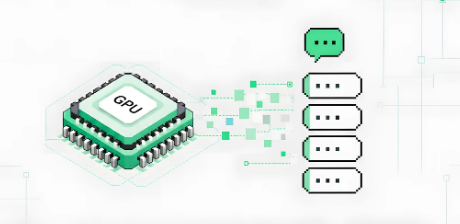
Officials offer a plain analogy: The national computing power network acts as a nationwide unified power grid for computing capacity. Under the old model, enterprises developing AI applications had to purchase and build their own server clusters, incurring high capital costs and low resource utilization rates.
The new national network interconnects data centers, supercomputing hubs and intelligent computing facilities nationwide under a unified scheduling system. Instead of purchasing hardware independently, businesses and developers can buy computing resources on demand from the network and pay based on usage. Cross-regional resource allocation will balance supply and demand fluctuations, drastically cutting barriers for AI innovation and digital transformation to make computing power universally accessible.
Trillion-yuan investment unlocks long-term industrial growth potential
The State Council Executive Meeting explicitly prioritizes coordinated development of the six core infrastructure networks, backed by large-scale fiscal funding and social capital inflows. The projected 7-trillion-yuan annual investment will deliver growth opportunities to the full industrial chain, covering computing hardware, optical communication equipment, servers, intelligent computing facilities, scheduling software and computing resource trading platforms.
Far-reaching economic and industrial benefits
- Cost reduction for enterprises: Small tech firms, manufacturers undergoing digital upgrades and large model developers will share idle national computing resources, eliminating redundant hardware investment and slashing expenses for AI research and smart industrial transformation.
- New digital consumption formats: Standardized computing services such as computing coupons and data plans will launch in the future, sold like water, electricity or mobile data to create an entirely new digital consumer market.
- Full industrial chain expansion: Upstream sectors including chips, servers and optical modules, midstream intelligent computing park construction and scheduling software, as well as downstream AI applications, industrial intelligence and digital content industries will all see expanded market scale, boosting revenue and employment across manufacturing, engineering and software services.
- Balanced regional development: Building on the East-to-West Computing Transfer project, the network bridges computing resource gaps between eastern and western regions. Western China’s abundant computing capacity will be converted into steady digital industry revenue, narrowing the digital economy development divide across regions.
Industry analysts note that computing power serves as the core fundamental production factor underpinning AI and the digital economy. The national push for a unified computing network upgrades the supply system of digital production factors via new infrastructure investment. In the short term, it will lift fixed-asset investment and stabilize macroeconomic performance; in the long run, it will lay a solid foundation for domestic large language models and general artificial intelligence, delivering sustained core support for long-term digital economic growth.