
A groundbreaking artificial intelligence system developed by Princeton University researchers has achieved unprecedented precision in monitoring and controlling fusion plasma, resolving one of the most stubborn technical barriers that have long delayed the commercialization of fusion energy.
Fusion energy, widely regarded as the ultimate clean energy solution, generates power by replicating the energy-generating process of the sun. It features zero carbon emissions, nearly unlimited fuel reserves and extreme safety advantages. However, stable control of high-temperature plasma has always been the core challenge of fusion research. Plasma inside fusion reactors is extremely unstable, and tiny fluctuations can trigger destructive turbulence in milliseconds, forcing emergency shutdowns and halting energy generation. Human operators are physically unable to respond fast enough to suppress such rapid instability, becoming a major obstacle to sustained fusion operation.
In the latest round of experimental tests completed in early September 2026, Princeton’s newly upgraded artificial intelligence (AI) control system demonstrated extraordinary real-time processing capabilities. The system can continuously monitor the complex state of high-temperature plasma inside the reactor and predict potential destructive instabilities approximately 200 milliseconds in advance – far beyond the reaction speed of human operators. Once risk signals are captured, the AI automatically adjusts magnetic field parameters and plasma operating conditions within milliseconds, accurately suppressing turbulence and maintaining stable plasma confinement.
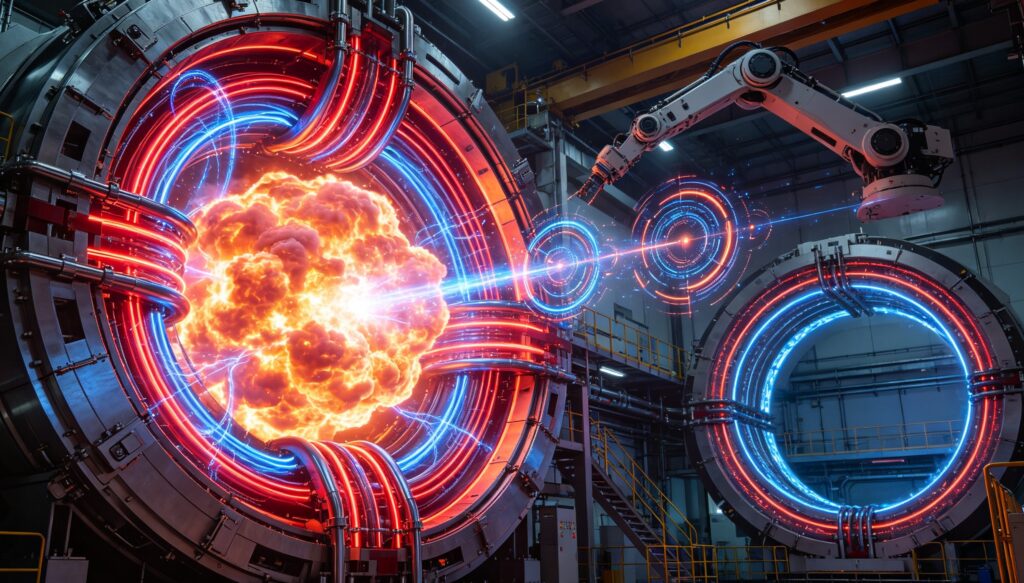
Traditional fusion control systems rely on pre-set physical models and manual intervention, which struggle to adapt to the real-time, nonlinear changes of plasma. In contrast, the new AI model is trained on massive sets of fusion operation data, enabling it to independently identify subtle plasma fluctuation patterns that human researchers cannot observe. It optimizes control strategies dynamically, greatly improving the stability and duration of plasma combustion.
Experimental data shows that the AI-controlled fusion reactor has achieved a 300% increase in stable continuous operation time compared with traditional manual control modes. The system effectively avoids unexpected shutdowns caused by plasma turbulence, significantly boosting the energy output efficiency of fusion devices. Researchers stated that this breakthrough fills the technical gap in ultra-fast plasma regulation and marks a critical step forward from experimental fusion research to practical commercial application.
The technological breakthrough also brings new possibilities for the industrialization layout of fusion energy. At present, multiple energy technology enterprises have begun to follow up on the Princeton research results, exploring the application of AI control systems in commercial fusion reactor prototypes. Industry analysts predict that with the continuous optimization of AI plasma control technology, the timeline for commercial fusion power generation may be greatly advanced, accelerating the global energy transition and helping countries achieve long-term carbon neutrality goals.
Looking ahead, the research team will further iterate the AI algorithm, optimize the system’s extreme environment adaptability, and carry out long-duration continuous operation tests. The ultimate goal is to realize fully autonomous, unattended intelligent operation of fusion reactors, laying a solid technical foundation for the large-scale promotion of clean fusion energy.