
Pop Mart International Group (09992.HK), a leading player in China’s trendy toy market, has seen its market value plummet by over HK$200 billion in just four months since hitting an all-time high in August this year. As of the close on December 11th, its share price had dived to HK$193.40, a 44% drop from the peak of HK$339.80, sparking heated discussions in the capital market about the sustainability of the trendy toy sector’s growth model.
Supply surge crushes resale premiums: The first domino falls
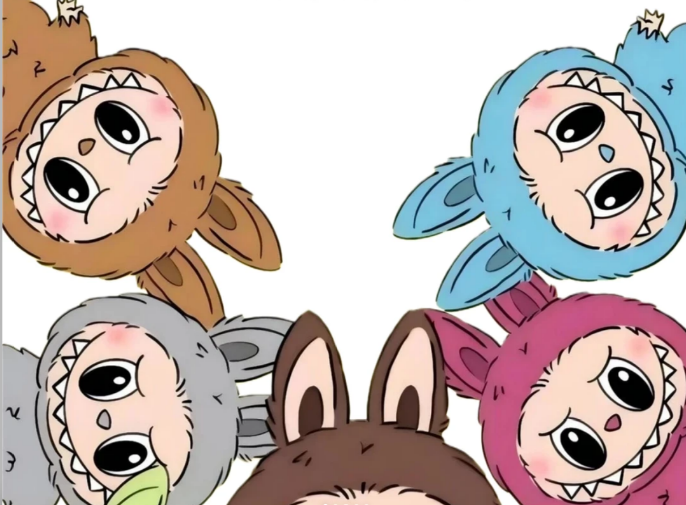
The slump was initially triggered by the collapse of the resale market for Pop Mart’s core IP products, a key driver of its previous valuation boom. For much of last year, products under flagship IPs like Labubu were in short supply, with second-hand prices soaring several times above the official retail value. This scarcity attracted a large number of speculators, or “scalpers”, who purchased blind boxes not for collection but for arbitrage, a trend that capital markets once misinterpreted as sustainable growth momentum.
However, starting from the second half of 2025, Pop Mart significantly ramped up production to address stock shortages. The monthly output of Labubu series surged from approximately 10 million units in the first half to 50 million units by the end of the year. This sudden supply expansion shattered the second-hand market’s price system: regular Labubu 3.0 and 4.0 models now sell below the official price on platforms like Xianyu and Dewu, while even limited-edition “hidden” models have lost half their premium value. A popular large figurine originally priced at 450 yuan now faces clearance sales near or below its launch price.
“I’m almost drowning in losses, with nearly one million yuan worth of inventory piling up in my warehouse,” a veteran scalper complained on an investor forum on December 10. The exodus of speculative funds has directly impacted short-term sales data, prompting a reevaluation of Pop Mart’s growth logic.
Short sellers pounce on overseas growth jitters
Wall Street short-selling institutions, including Bernstein and Deutsche Bank, quickly seized on the scalper exodus to build a bearish narrative, amplifying market panic. Deutsche Bank highlighted the fading scarcity dividend as a fatal signal, arguing that without speculative demand, Pop Mart is reverting from a high-growth trendy IP company to an ordinary toy retailer.
Bernstein drew parallels to the 1990s Beanie Babies bubble burst in the United States, warning that unlike Disney’s IPs with rich storytelling, Pop Mart’s products rely solely on aesthetics and design. “In the fast-changing fashion consumption circle, such IPs without a narrative core have shorter lifespans than expected,” the institution noted in a research report, cautioning against a potential repeat of the Beanie Babies’ collapse.
Adding to the pressure is the slowing growth of Pop Mart’s overseas business, once a pillar of its high valuation. While its American market revenue soared by 1,200% year-on-year in the third quarter, high-frequency credit card data from Yipit, a third-party firm, showed muted sales momentum in November. Even during the “Black Friday” promotion period, there was no expected explosive growth. Bernstein estimates that the U.S. growth rate has slowed to below 500% this quarter, a sharp contrast to the previous quarter’s surge, shaking investor confidence in its global expansion story.
Short-selling activities have intensified accordingly. Hong Kong Exchanges data showed that short-selling volume on Pop Mart reached HK$1.092 billion on December 8, a two-year high. As of December 4, its short interest ratio rose to 6.3% of tradable shares, the highest level since August 2023.
Market divide: Value trap or healthy correction?
Amid the panic selling, the market has shown clear divergence. Southbound funds have been net buyers for consecutive days since December 8, with a cumulative net inflow of HK$4.923 billion in the past 30 days, indicating confidence from long-term investors.
Pop Mart has pushed back against the bearish arguments, clarifying that high-frequency data has limitations and does not align with its advance payment recognition rules. The company emphasized that scalpers account for only 3% of its customer base, and its supply strategy aims to meet genuine consumer demand rather than relying on speculation to inflate IP value. It also noted that businesses in Europe, Southeast Asia, and domestic markets continue to grow sequentially, with the newly launched “Star People Christmas Gift Box” selling briskly in the fourth quarter.
Recent strategic moves have also sent positive signals. On December 10, Pop Mart announced the appointment of Wu Yue, former President of LVMH Greater China, as an independent non-executive director, a move interpreted by the market as a step to strengthen brand upgrading and global operations. The stock rebounded by about 2% intraday on December 11th, showing signs of stabilization.
Industry analysts generally believe that Pop Mart is transitioning from an explosive growth phase to a steady growth period. While the withdrawal of speculative funds has caused short-term pain, it also helps the company return to its retail essence. “Stripping away the speculative froth left by scalpers reveals its true commercial value,” said an analyst at Cinda Securities. The key challenge for Pop Mart now lies in diversifying its IP portfolio to drive growth, as market expectations suggest Labubu’s revenue growth will slow significantly in 2026.
Founder Wang Ning previously commented on market volatility, stating, “With a market value of over HK$300 billion, a 2% drop translates to HK$10 billion. We focus on building a good and long-term enterprise, and market value fluctuations are just votes from the market.” As the trendy toy sector matures, whether Pop Mart can rebuild investor confidence through IP innovation and global operational optimization remains to be seen.