
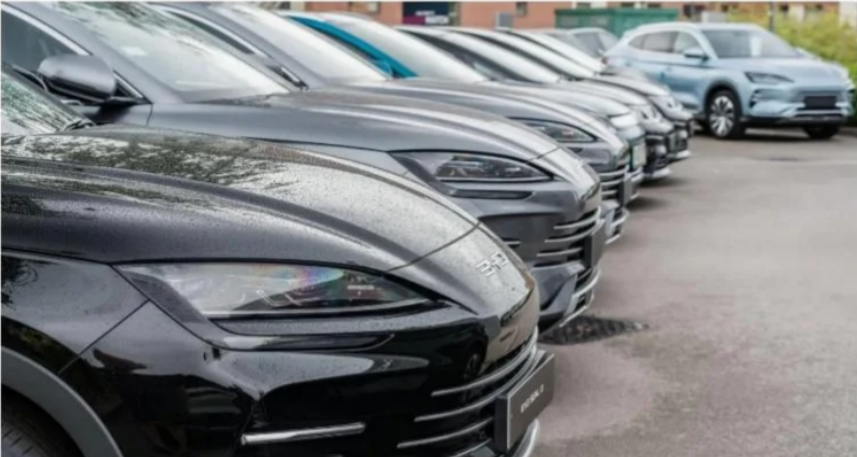
A seismic shift has reshaped the global electric vehicle (EV) landscape as China’s BYD officially dethroned Tesla as the world’s largest EV manufacturer in 2025, marking the first time a Chinese automaker has claimed the top spot. The historic milestone, driven by explosive growth in both domestic and international markets, signals a fundamental reordering of power dynamics in the rapidly evolving EV industry.
BYD’s record-breaking 2025 performance
BYD’s ascent to the summit is anchored in staggering sales figures. The Shenzhen-based automaker delivered 2.26 million pure electric vehicles (BEVs) globally in 2025, representing a 27.86% year-on-year increase from 2024’s 1.76 million units. When including its plug-in hybrid electric vehicles (PHEVs), BYD’s total new energy vehicle (NEV) sales soared to nearly 4.3 million units – more than double Tesla’s full-year deliveries of 1.64 million BEVs.
The quarterly trajectory underscored BYD’s accelerating momentum. After narrowly edging past Tesla in Q4 2024, BYD widened its lead in 2025 with consistent double-digit growth across all regions. Its Q1 2025 BEV sales jumped 39% year-on-year, fueled by strong demand for models like the Seagull, Yuan UP, and Song series, which collectively dominated mass-market segments globally. Notably, BYD’s overseas shipments exceeded 1.42 million units in 2025, accounting for 34.5% of total sales – up from just 5% in 2020 – and signaling the success of its global expansion strategy.
Tesla’s slump amid market shifts and strategic challenges
Tesla’s reign as the EV leader ended amid a confluence of headwinds. The U.S. automaker’s 2025 deliveries fell 8.6% year-on-year to 1.64 million units, with quarterly declines becoming a recurring trend: Q4 2025 deliveries dropped 16% to 418,227 units, missing both analyst expectations and internal targets. Three key factors contributed to its decline:
First, aggressive price cuts eroded profitability. Tesla reduced Model 3 and Model Y starting prices by 12-12.1% in 2025 to stimulate demand, but the strategy compressed profit margins while failing to offset market share losses to more agile competitors. Second, rising operational costs – driven by heavy investments in AI, robotics, and its Megapack energy storage business – weighed on earnings. The company’s Q3 2025 operational costs surged 50% year-on-year, even as regulatory credit income (a once-reliable profit stream) plummeted 44%. Third, product lineup stagnation hampered competitiveness: Tesla’s core models (Model 3/Y) have not undergone major overhauls in five years, while new offerings like the Cybertruck failed to launch in key markets like Europe.
Regionally, Tesla faced widespread declines. Its market share in China – once its largest growth engine – fell from 15% in 2020 to 5.5% in Q3 2025 as domestic brands like BYD, Geely, and NIO captured share. In Europe, Tesla’s sales dropped 10.5% year-on-year in 2025, exacerbated by political controversies surrounding CEO Elon Musk and the rise of Chinese competitors offering localized products. Even in its home U.S. market, Tesla’s dominance weakened: its share fell to 38% in August 2025, down from over 70% in 2020, as federal tax credits expired and BYD expanded its presence in Mexico and Canada.
Regional expansion: BYD’s global footprint takes shape
BYD’s global triumph is largely attributed to its targeted regional strategies, which prioritized localization, product diversification, and market adaptability. In Europe – long considered the “fortress” of traditional automakers – BYD achieved a breakthrough: Its 2025 sales grew 287% year-on-year, capturing 8.7% of the EV market. Key wins included Spain (9.7% market share, 756% growth) and Italy (10% share, 140% quarterly growth), where models like the Tang and Han SUVs shattered perceptions of Chinese cars as “low-cost and low-quality”.
In Latin America, BYD’s Brazil factory – launched in July 2025 became a cornerstone of its strategy, producing 4.7 million units in H1 2025 and capturing 85% of Brazil’s EV market. The facility, Latin America’s largest EV manufacturing center, exemplifies BYD’s shift from “product export” to “localized production”, helping it navigate trade barriers and gain policy support.
Asia Pacific emerged as another stronghold. In Thailand, BYD secured 35% of the pure EV market, displacing long-dominant Japanese brands. In Singapore, it became the top-selling passenger car brand in H1 2025, while in Hong Kong, the Seal 07 model led monthly sales charts with 5,000 units sold in six months. Even in Japan – one of the most closed automotive markets – BYD’s partnership with actress Masami Nagasawa and tailored product offerings drove steady growth.
Industry impact: A new era of global ev competition
BYD’s ascent marks more than a corporate victory; it signals a broader shift in the global automotive industry. Chinese automakers now hold 48% of the global EV market, up from 24% in 2020, while U.S. brands have declined from 22% to 18% over the same period. This shift reflects China’s investments in battery technology, supply chain integration, and government support for NEVs, which have created a virtuous cycle of innovation and scale.
For competitors, BYD’s success raises urgent questions. Traditional automakers like Volkswagen and Toyota face mounting pressure to accelerate electrification, while Tesla must rethink its strategy to regain momentum. Analysts suggest Tesla’s focus on AI and robotics, while futuristic has diverted resources from core automotive innovation, leaving gaps that BYD and others have exploited.
Looking ahead, challenges remain for BYD. Trade protectionism, such as the EU’s 2024 tariffs on Chinese EVs and the UK’s 2025 discriminatory subsidies – threatens growth in key markets. Brand perception also lingers as a hurdle: while BYD has made strides in Europe and Asia, it still trails Tesla in brand premium in North America. However, with plans to expand localized production in Mexico and Canada, and ongoing investments in advanced technologies like blade batteries and cell-to-body (CTB) integration, BYD is well-positioned to defend its lead.
As the dust settles on 2025, one thing is clear: The global EV race has a new leader. BYD’s victory is a testament to the power of vertical integration, regional agility, and customer-centric innovation – lessons that will shape the industry for years to come. For consumers, this competition promises more affordable, technologically advanced EVs. For the planet, it accelerates the transition to sustainable transportation. For the automotive industry, it marks the end of an era and the beginning of a more diverse, competitive global marketplace.