
The legal battle over the “legality” of former President Trump’s tariffs is nearing its conclusion. The US Supreme Court announced earlier that it will issue its ruling on the case this Friday, January 9th. Reuters reported on January 7th, citing data from US Customs and Border Protection (CBP), that if the Supreme Court rules that the tariffs imposed by Trump under the International Emergency Economic Powers Act (IEEPA) were unlawful, the federal government may be forced to refund importers more than $133.5 billion.
That day, CBP released updated statistics covering import goods subject to tariffs since Trump first invoked the IEEPA to impose them in February of last year.The $133.5 billion figure represents the cumulative assessed tariff total as of December 14th. This includes $81.74 billion in so-called “reciprocal tariffs” levied on all items from all countries and regions, plus additional punitive tariffs on Fentanyl-related goods and tariffs imposed specifically on Brazil and India.The data shows that Fentanyl-related tariffs imposed on Mexico and Canada amounted to $6.48 billion and $2.42 billion, respectively.The Supreme Court held its first hearing on the Trump tariff case on November 5th last year and is expected to issue rulings on some cases on the 9th, though it has not yet disclosed which specific cases will be decided.Justices are scheduled to announce potential rulings when the court convenes at 10 AM local time on the 9th.
Previously, the US Court of International Trade and the Federal Circuit Court of Appeals had ruled in May and August of last year, respectively, that Trump’s tariffs were unlawful. Trump argued that issues like the US trade deficit constituted a “national emergency”, thus authorizing tariffs under the IEEPA. However, the majority opinion in the appeals court stated that the president cannot levy tariffs without congressional authorization.
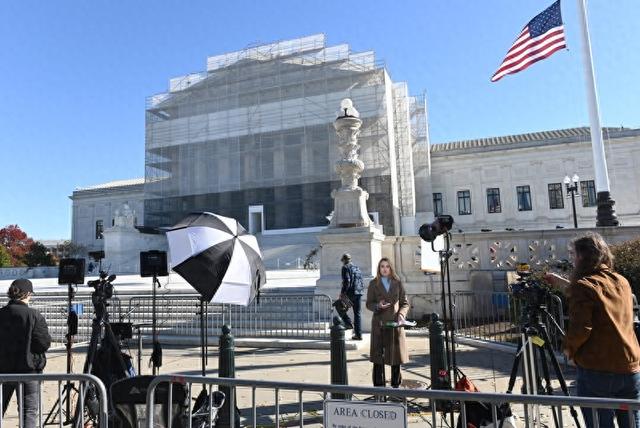
Among the nine Supreme Court Justices, the conservative-to-liberal ratio is six to three. During the hearing, Chief Justice John Roberts reportedly stated that tariffs and other taxes have always been a core power of Congress, and allowing the president’s foreign affairs power to override this fundamental congressional power seems to undermine the balance between the executive and legislative branches. Conservative Justice Neil Gorsuch, appointed during Trump’s first term, expressed concern that this would lead to continuous expansion of executive power and a gradual erosion of congressional authority.
Representing the Trump administration, Deputy Solicitor General Noel Francisco argued that the IEEPA authorizes the president to “regulate” imports, which naturally includes the power to impose tariffs. Analysis widely suggests that a Supreme Court ruling unfavorable to the Trump administration would directly deal a major blow to Trump’s signature economic agenda, potentially becoming his most significant legal setback if he returns to the White House. Data from online prediction platforms Kalshi and Polymarket show Trump’s probability of winning the case at 30% and 23%, respectively. Before the hearing, both platforms had placed his chances of success around 40%. During the hearing, several justices questioned whether the Trump administration had the authority to impose tariffs under the IEEPA. It remains unclear whether the Supreme Court, if it finds the tariffs illegal, would directly order refunds or leave that issue to lower courts or the federal government to handle.
Previously, Trump claimed on social media that the US had collected or would collect $600 billion in tariffs. US Treasury Department data shows that in fiscal year 2025, ending September 30th, net US tariff revenue reached a record high of $195 billion. Since then, monthly tariff revenue has remained in the lower range of around $30 billion. Reportedly, the Trump administration has prepared plans to reimpose import tariffs in the event of an unfavorable ruling. Options include more widespread use of Section 232 of the Trade Expansion Act of 1962, which has previously been used to impose tariffs on products like steel, aluminum, automobiles, copper, and lumber. Additionally, the federal government could invoke Section 122 of the Trade Act of 1974, allowing tariffs of up to 15% for 150 days. Another potential tool is Section 338 of the Tariff Act of 1930. Though less used in recent years, it permits immediate tariffs of up to 50% on countries found to engage in trade discrimination.
The stakes are also significant for numerous US and global businesses. These companies have borne the cost of the tariffs while being strained by rapidly changing policies. For example, US toy retailer Learning Resources, which sources most of its products overseas, is one of the companies suing the Trump administration. Its CEO, Rick Woldenberg, stated that Trump’s tariffs were projected to cost the company $14 million last year, seven times its tariff expenditure in 2024. “These tariffs have thrown our business into unimaginable chaos.” He noted, adding that since January last year, the company had to shift production locations for hundreds of products. Harris from “Cooperative Coffee Company” said that if the Trump administration loses and is forced to refund tariffs, the company “certainly” would try to recover paid duties, but this couldn’t compensate for all the losses caused by the disruption.