
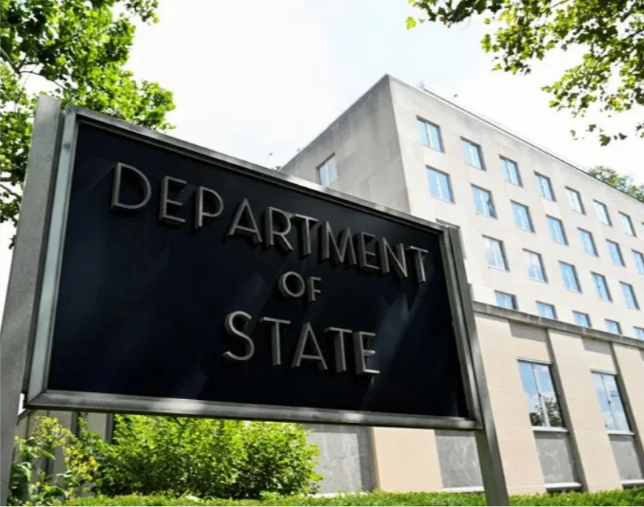
Xinhua News Agency, Washington/Beijing, January 15 – On January 14 (local time), the U.S. Department of State officially announced that it will indefinitely suspend all immigrant visa processing for 75 countries starting from January 21, citing the need to “crack down on applicants who may become public burdens”. This blanket policy covering multiple regions including Asia, Africa, Europe, and South America has not only sparked widespread international questioning but also quickly transmitted shocks to various global economic sectors such as trade, tourism, and education, with significant risks looming for relevant U.S. industries themselves.
Policy implementation: Comprehensive blockade covering multiple nations
According to the U.S. State Department’s statement and partially disclosed list, affected countries include major economies and populous nations such as Russia, Brazil, Iran, Egypt, Nigeria, and Thailand, encompassing traditional strategic rivals, emerging markets, and developing countries. The policy will remain in effect until the U.S. completes the evaluation of new screening and review standards. During this period, consular officers are required to reject all relevant visa applications in accordance with existing laws. Notably, the full list of 75 countries has not been released, and the lack of transparency has further exacerbated market panic.
It is worth noting that this policy is not an isolated move. Since the beginning of 2025, the Trump administration has repeatedly tightened immigrant visa review standards. This suspension order marks a new phase of comprehensive tightening in U.S. immigration control, expanding from specific groups to all potential applicants. The U.S. claim of “preventing welfare exploitation” has been widely refuted. Data shows that immigrants have long been a core labor supplement for U.S. industries such as construction, agriculture, and healthcare, where the proportion of local labor in some sectors is less than 15%.
Economic shocks: Mounting pressures across sectors
Labor market bears the brunt. Multiple U.S. industry associations issued urgent warnings on January 15, stating that the spring labor shortage will be exacerbated by the policy. Industries relying on seasonal foreign labor, such as agriculture, construction, and catering, are facing project delays and rising costs. Meanwhile, overseas talent recruitment plans of Silicon Valley tech companies have been shelved, hindering the progress of innovative projects. A previous Federal Reserve report warned that continued tightening of immigration policies could lead to a loss of more than 1 percentage point in U.S. economic growth by 2027.
Tourism and cross-border trade suffer heavy blows. The Russian Union of Tourism Industry has clearly stated that travel to the U.S. has effectively come to a standstill. Data indicates that international tourist arrivals to the U.S. already declined by 18% in 2025 due to visa tightening, and this ban may further impact popular attractions such as New York’s Times Square and California’s Disneyland, endangering 15 million related jobs. At the same time, cross-border corporate personnel assignments and trade negotiations have been disrupted or shifted online, significantly reducing supply chain coordination efficiency and directly impacting enterprises dependent on the U.S. market.
Higher education sector faces financial strains. U.S. universities are highly reliant on tuition fees from international students. The visa suspension has left thousands of international students scheduled to enroll in the spring semester unable to obtain visas, and the number of international students may plummet by 25%. Presidents of multiple universities have jointly sent a letter to the State Department, urging a reassessment of the policy’s negative impact on the education sector.
Global repercussions: Countermeasures and restructuring of talent flow
In response to the U.S. unilateralist policy, relevant countries have taken successive countermeasures. Chad and Eritrea took the lead in announcing the suspension of visa issuance to U.S. citizens. The African Union and the Association of Southeast Asian Nations (ASEAN) condemned the move as “undermining diplomatic mutual trust”, while Russia, Iran, and other countries publicly criticized the policy’s hegemonic nature and racial discrimination. Some European allies expressed “shock and disappointment”, and diplomatic sources revealed that many countries are considering reciprocal countermeasures.
In terms of talent competition, the U.S. policy contraction has created opportunities for other countries. Canada, Australia, and many European nations are leveraging more relaxed visa policies to attract high-tech talents and investment capital originally planning to go to the U.S., accelerating the restructuring of the global talent flow pattern. The International Monetary Fund (IMF) has warned that such deglobalization policies could lead to a 3.3% contraction in U.S. GDP in the long run.
Underlying drivers: Economic risks amid political maneuvering
Analysts point out that the U.S.’s large-scale visa suspension is essentially a political maneuver to serve domestic elections. The Trump administration seeks to consolidate the base of conservative voters and divert domestic contradictions through “tough immigration policies”, whose core motives are fundamentally contradictory to the U.S. economy’s current demand for labor and talent. From a policy perspective, U.S. immigration policies in recent years have shown a “selective” characteristic, favoring high-net-worth individuals while excluding ordinary workers. This utilitarian tendency may undermine its innovative vitality and international competitiveness in the long run.
Currently, global markets are closely monitoring the policy’s subsequent developments. As the U.S.’s international image as a “land of opportunity” continues to fade, the long-term outflow of talents and capital may have a profound impact on its core economic competitiveness. The global economic ripple effects triggered by this visa blockade are still unfolding.