
SpaceX made a landmark announcement that it has acquired xAI, the artificial intelligence (AI) company founded by Elon Musk, in a deal valued at $125 million. The acquisition marks a bold step to merge cutting-edge AI development with SpaceX’s reusable rocket and satellite technologies, aiming to create what industry analysts are calling the “next generation of computing infrastructure”.
A paradigm shift from cloud to space
Elon Musk, CEO of both SpaceX and xAI, explained the strategic vision behind the move during an internal company meeting. “AI is not just about algorithms – it is fundamentally a problem of energy and infrastructure,” he said. “On Earth, data centers are constrained by limited access to renewable energy, cooling water, and land. In space, we can tap into near-unlimited solar power and eliminate the bottlenecks that hold AI progress back.”
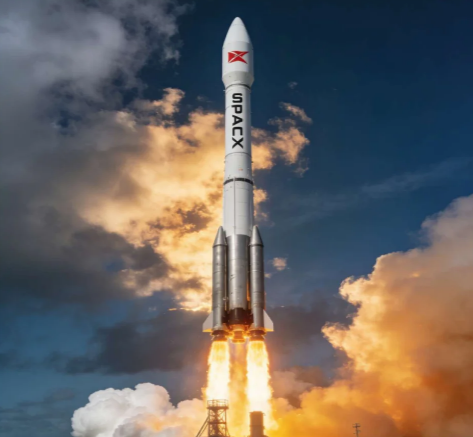
The core of this plan hinges on SpaceX’s Starship launch vehicle and its ambitious Starlink satellite constellation. The company aims to deploy 1 million satellites in low Earth orbit (LEO), creating a network that can deliver 100 gigawatts of computing power globally. With Starship’s 200-ton per-hour launch capacity, SpaceX intends to turn its rocket production line into a “factory for space-based data centers”, drastically reducing the cost of launching and maintaining AI infrastructure in orbit.
Redefining the AI and space industries
Industry experts believe this acquisition could have implications as far-reaching as Amazon’s launch of AWS, which revolutionized cloud computing. “AWS brought computing to the cloud, SpaceX is now bringing the cloud to space,” said Dr. Laura Chen, a tech infrastructure analyst at Gartner. “If successful, this could drive down AI training costs by orders of magnitude, triggering a new wave of innovation in everything from generative AI to climate modeling.”
The move also signals a blurring of lines between aerospace and tech giants. As computing infrastructure moves to orbit, companies will need expertise in both rocket engineering and AI development – a combination that positions SpaceX as a unique competitor. “The next tech giant won’t just be an AI company or a space company,” Musk noted in a recent tweet. “It will be both.”
Challenges and the road ahead
Despite the ambitious vision, significant technical and regulatory hurdles remain. Building and maintaining a million-satellite constellation will require unprecedented advances in satellite miniaturization, orbital debris management, and in-space servicing. Additionally, the project will demand close collaboration with international regulators to address spectrum allocation and space traffic management.
For xAI’s team, the transition means shifting focus from purely algorithmic research to optimizing AI models for space-based hardware. “Our goal is to create AI systems that can operate seamlessly across Earth and space,” said xAI’s lead engineer, Dr. Raj Patel. “This isn’t just about moving data centers upward – it’s about reimagining how AI is built and deployed.”
As SpaceX begins integrating xAI’s talent and technology into its operations, the world will be watching to see if this bold bet can turn the final frontier into the next frontier of computing. In the words of Elon Musk, “We’re not just aiming to change AI. We’re aiming to change the future of humanity’s relationship with space itself.”