
A promising start: The inaugural year of the 15th Five-Year Plan, a booming cultural market on the horizon
This year marks the inaugural year of the 15th Five-Year Plan, and the cultural industry shoulders a dual mission. It is not only an important carrier to meet the people’s yearning for a better life, but also a key engine driving future economic growth.
At the start of the new year, the cultural market is thriving on multiple fronts. The cultural and tourism market ushers in the “longest Spring Festival holiday in history”, with winter signature products such as ice-snow tourism and winter sun tourism enjoying soaring popularity. The film market is fully prepared for the Spring Festival season, and the audiovisual feasts have sparked nationwide anticipation. Various New Year performances are staged intensively. Industry reports predict that the scale of China’s performance market will historically cross the 100-billion-yuan threshold in 2026.
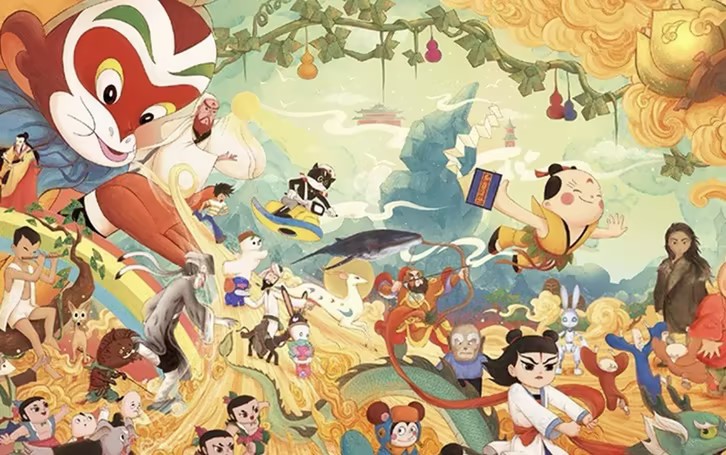
Meanwhile, niche sectors including short micro-dramas, Guochao (Chinese fashion), and trendy toys are brimming with highlights yet facing numerous development challenges. How to translate the popularity of animated films into lasting cultural influence? How can short micro-dramas break through the bottleneck of traffic? How can the trendy toy industry shift from creating hit products to achieving long-term prosperity? These questions jointly outline the development pulse and forward direction of China’s cultural industry in 2026, with the principle of “content is king” remaining the core tenet running through the industry’s development.
Upgrading quality and empowering development: Dual drive of in-depth content creation and technology integration
The principle of “content is king” enters a stage of higher-quality development this year, and the scarce value of high-quality content has become increasingly prominent. Content creation is moving away from catering to sensory stimulation, and transforming towards deeper value, richer cultural connotation and warmer emotional resonance.
The short micro-drama sector stands out in particular. Works such as Mastering Fat Loss Secrets, I Astound the Ancients and Claiming the Langya Lineage either integrate professional knowledge or delve deep into historical culture. They have reversed the industry’s stereotype of “shoddy and hasty production” and explored the cross-border value of “short micro-dramas + cultural tourism” and “short micro-dramas + cultural and creative products”. The development of Guochao abandons simple symbol transplantation and conducts innovative transformation by digging deep into the spiritual core of traditional Chinese culture, with examples including Ne Zha: Birth of the Demon Child 2.
In the meantime, content innovation cannot do without systemic support. Policies, capital, talent development and copyright protection work in tandem to build a sustainable industrial innovation system. Scientific and technological innovation has become an important empowering engine, with technologies such as Virtual Reality (VR), Augmented Reality (AR) and Extended Reality (XR) being widely applied in the cultural tourism and film sectors. The premiere of Success Gallops In equipped with the CINITY science system offers an immersive experience. Digital exhibitions at the Palace Museum and Dunhuang Mogao Grottoes have enabled traditional culture to break through the constraints of time and space.

Innovating for breakthrough: Synergistic advancement of scene upgrading and global layout
The development of the cultural industry has shifted from the traditional “product supply” to “scene creation”. Consumers, especially the younger generation, are increasingly pursuing interactive and immersive cultural experiences. The model of “cultural tourism + various industries” has spawned numerous new forms of business and new scenes.
The “Travel with Short Micro-dramas” initiative launched by the National Radio and Television Administration has realized the scene-based integration of narrative content and local cultural tourism resources, making the phenomenon of “a single drama boosting the popularity of a city” a common occurrence. Urban cultural complexes integrate diverse functions, serving as “cultural living rooms” that invigorate community vitality and delivering remarkable economic and social benefits. Nevertheless, scene innovation must guard against the tendency of “prioritizing form over content” and establish a long-term IP operation mechanism to avoid the depletion of scene value.
As the domestic market upgrades in quality, the pace of international layout is accelerating. Cultural “new three core export products” (online literature, online films and TV dramas, and online games) and brands like Pop Mart have expanded overseas, making the overseas market an important growth pole.
In 2026, China’s cultural industry needs to upgrade from “product export” to “ecological co-construction” and adhere to the strategy of “global resonance and local rooting”. It is essential to both explore the cultural core shared by humanity and integrate deeply into target markets. Ultimately, we will drive China’s cultural industry to realize a profound transformation from “Chinese products” to “Chinese brands” and then to “Chinese values”, striking a new chord for Chinese culture on the world stage.