
What did our distant ancestors look like? Paleontologists have made new discoveries. A research team from the Chinese Academy of Sciences recently announced the discovery of two Silurian fossil fish in Chongqing and Yunnan, which precisely fill an important gap in the evolutionary history from fish to humans.
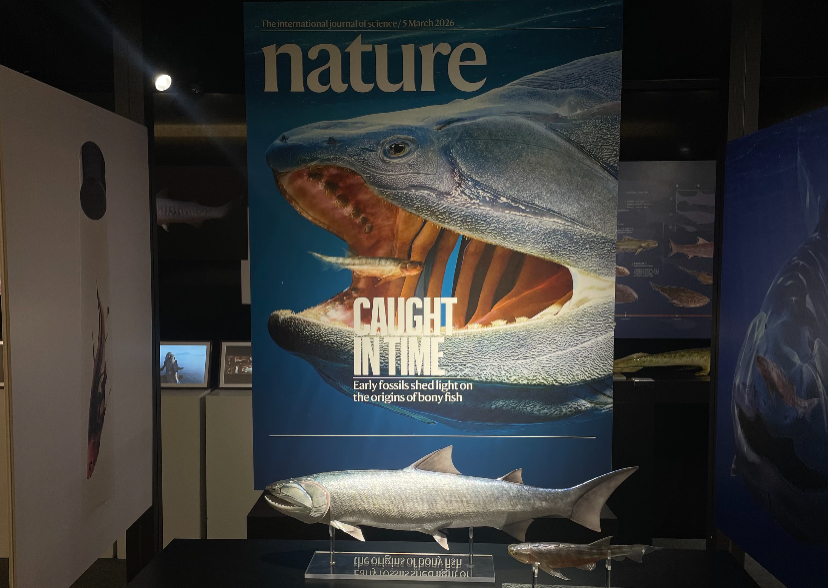
These two findings were published simultaneously as cover stories in the international academic journal Nature. The research was conducted by the team led by Academician Zhu Min from the Institute of Vertebrate Paleontology and Paleoanthropology, Chinese Academy of Sciences. It reveals the oldest known bony fishes in the world and offers a glimpse of the common ancestor shared by humans and most fish alive today.
Bony fishes, as the name suggests, are fishes with hardened bones. They form the main branch of vertebrate evolution. Most familiar fish on Earth today belong to the ray-finned fishes, a subgroup of bony fishes. The tetrapod lineage, to which humans belong, evolved from another group of bony fishes: the lobe-finned fishes. Therefore, understanding the earliest form of bony fishes is key to unlocking the evolutionary link between aquatic life and terrestrial life.
However, fossil evidence for this critical stage was long missing. The scientific community only knew later-evolving relatives but had no clear picture of the earliest ancestor.
The research team has reported two major discoveries:
The first discovery is Chongqingaspis jianxiensis, which lived about 436 million years ago. Fossils were unearthed in Xiushan, Chongqing. This small fish, only 3 centimeters long, miraculously preserved a complete skeleton. It is older than all previously discovered large bony fish fossils and even earlier than scattered microfossils of bony fishes. Strangely, it displays a mix of features from different fish groups: its body resembles early ray‑finned fishes, but it has an anal fin spine normally found in more primitive fishes. This indicates that the core characteristics of bony fishes had already started to take shape in the early Silurian, much earlier than previously thought.
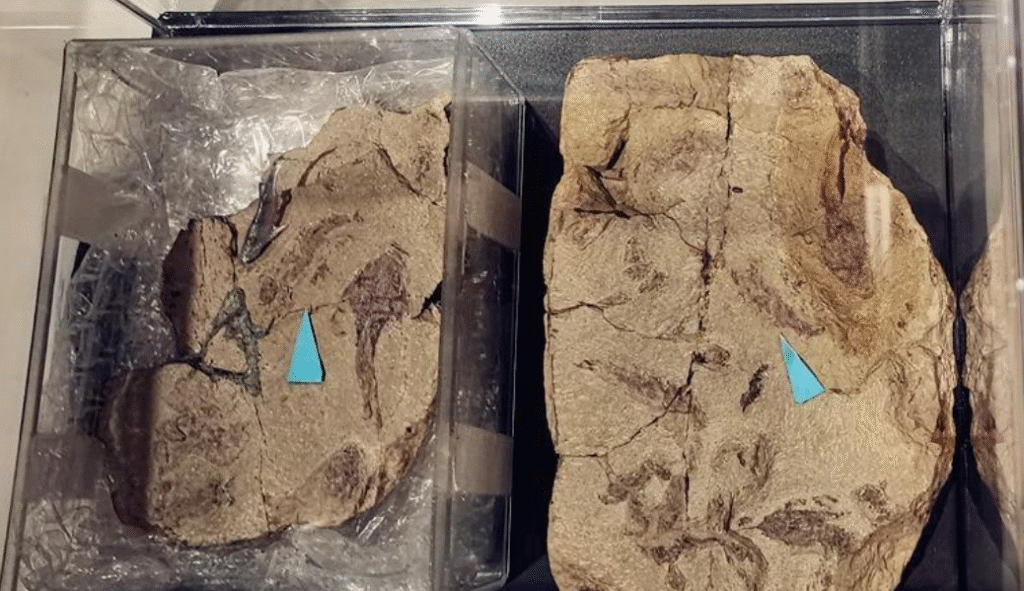
The second discovery is Megamastax amblyodus from Qujing, Yunnan, dating back about 423 million years. This fish was a “giant” of the Silurian, reaching over 1 meter in length. After nearly a decade of technical research, the team used high‑resolution CT scanning and 3D reconstruction to restore its complete cranial structure. Most importantly, it solved the “tooth pad” puzzle that had puzzled scientists for half a century. The strange isolated teeth found in Europe actually belonged to this type of primitive bony fish.
Evolutionary analysis shows that these two fossil fish lie just before the split between the two major groups of bony fishes: ray‑finned fishes and lobe‑finned fishes. They belong to the earliest stem group of bony fishes. These discoveries not only refute the previous hypothesis that the ancestor of bony fishes was more similar to lobe-finned fishes but also clearly depict what the last common ancestor of the human lineage and most modern fish looked like.
This series of findings further confirms that the “Cradle of the East”, centered on South China, was not only the origin of bony fishes but also a key region for the early evolution of all jawed vertebrates. The research team believes that with continued study of these unique Silurian fossils, the early story of “from fish to human” will continue to be rewritten.