
A landmark breakthrough has been achieved in China’s Brain-computer Interface (BCI) sector: the world’s first invasive BCI medical device has officially received market approval, and the National Healthcare Security Administration (NHSA) has simultaneously completed its medical insurance coding, clearing a critical barrier for translating cutting-edge medical technology from the lab to clinical practice. This milestone marks the BCI industry’s official transition from a “blueprint for the future” to a “fast track for real-world deployment”.
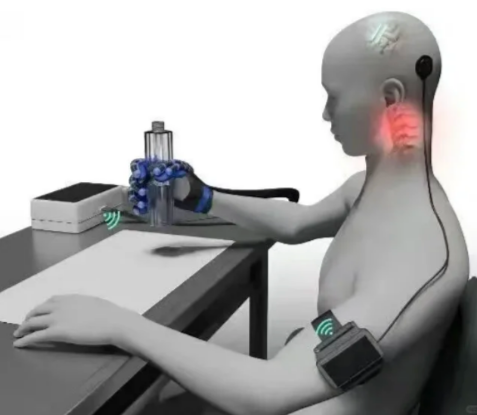
According to the NHSA, the innovative product, named the Implantable BCI Hand Motor Function Compensation System, was formally approved for market launch on March 13th. Just two days later, on March 15th, the NHSA proactively engaged in targeted services to complete the medical insurance coding and assignment for the device, drastically shortening the timeline from approval to clinical application. Designed primarily for patients with high-level paraplegia caused by spinal cord injury (SCI), the system leverages invasive BCI technology to directly decode neural signals from the brain’s motor cortex, translating them into control commands for external devices. This enables patients to regain compensatory hand motor functions, such as grasping and manipulation, offering a transformative path to restored daily independence for the high-level paraplegia population.
Official data shows that China has over 3.7 million cumulative SCI patients, with an annual increase of approximately 90,000 new cases. Among these patients, those with high-level paraplegia often face complete loss of hand motor function due to spinal nerve damage, severely limiting their ability to live independently, with traditional rehabilitation methods yielding limited efficacy. The newly approved BCI system is the world’s first invasive BCI medical device to achieve clinical translation. Its market launch and integration into the medical insurance coding system not only provides a novel therapeutic solution for patients but also breaks the long-standing perception that BCI technology remains confined to research labs, offering a Chinese solution to the global neurorehabilitation field.
Industry experts note that BCI technology is a cutting-edge interdisciplinary field integrating neuroscience, artificial intelligence, and medical devices. Invasive BCI, renowned for its high signal accuracy and stability, has long been regarded as the “ultimate form” of BCI technology, yet its clinical translation and deployment have faced persistent challenges. China’s achievement in launching the world’s first invasive BCI medical device and securing its medical insurance coverage not only demonstrates the country’s technological leadership in the BCI sector but also establishes an efficient pathway for the clinical promotion of innovative medical technologies through proactive policy alignment by healthcare authorities. This will accelerate the large-scale application of BCI technology in neurorehabilitation, neurological disease treatment, and other related fields.
A spokesperson for the NHSA stated that the administration will continue to deepen the “healthcare insurance-enabled innovation” mechanism, launching a green channel for coding and assignment for innovative medical devices with high clinical value and urgent patient demand, to bring more cutting-edge medical technologies to the general public. The integration of this BCI product into the medical insurance system also lays a policy foundation for the clinical application of subsequent BCI innovations, which is expected to drive the rapid development of the entire BCI industrial chain and foster more technological breakthroughs in the medical and rehabilitation sectors.