
Shanghai Pudong has been tasked with strengthening its capacity for global resource allocation and becoming a central hub of the domestic economic cycle and a strategic link in the dual domestic and international circulation. This was the earnest expectation set for Shanghai by General Secretary Xi Jinping more than five years ago at the ceremony marking the 30th anniversary of Pudong’s development and opening-up. It is also a strategic mission and historic responsibility entrusted to the city as China advances toward Chinese-style modernization. Under high-standard opening-up, Shanghai’s three major strategic roles are: a central hub of the domestic economic cycle, a strategic link in dual circulation, and a major hub for global resource allocation.
At a time of headwinds against globalization, accelerated industrial chain restructuring and a surging sci-tech revolution, China urgently needs a strategic pivot to represent the country in global competition and cooperation. As China’s economic center and a frontier of reform and opening-up, Shanghai is uniquely positioned to shoulder all three opening-up strategies. It boasts distinctive geographical advantages, solid strengths in finance, trade, shipping, logistics and talent. It also has achievements and experience in institutional opening-up from the Pudong Leading Area for Socialist Modernization, China (Shanghai) Pilot Free Trade Zone and Lingang Special Area in recent years.
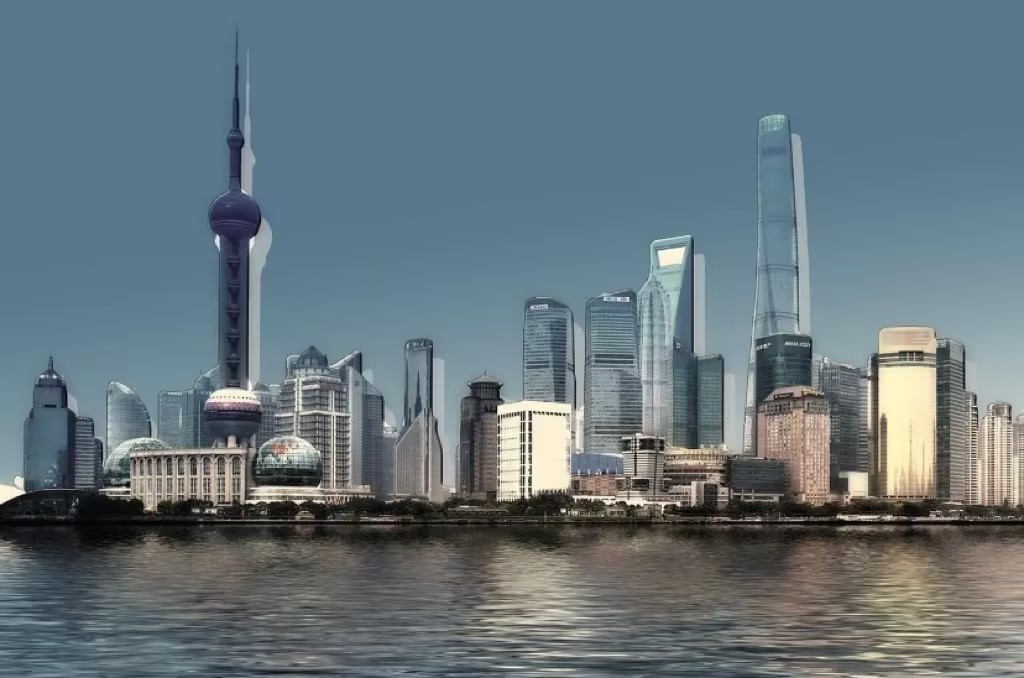
Building a central hub of the domestic economic cycle
Shanghai sits at the mouth of the Yangtze River, a golden intersection connecting the Yangtze River Basin, China’s vast inland regions and the global maritime market. Its strategic location linking east and west, north and south gives it a natural geographical edge to serve as a central hub of the domestic economic cycle. Supported by an extensive network of high-speed railways, expressways and dense domestic and international air routes, it has become an irreplaceable transport hub.
Shanghai’s large economic scale provides strong support for this role. In 2025, its GDP exceeded 5.6 trillion yuan. Its port trade volume ranks first among global cities, outperforming major metropolises in Western developed countries.
Striving to be a strategic link in dual circulation
A strategic link in dual circulation refers to mechanisms and channels that deeply connect and empower China’s huge domestic market and the broad international market. It is not a simple 1+1 combination. Through two-way opening-up, the two cycles reinforce each other and achieve dynamic balance in planning, industries and factor markets, lifting overall economic efficiency and performance.
Shanghai has four core strengths in this regard:
(1) Soft connectivity of rules and institutions. Through institutional opening-up, it aligns with high-standard international economic and trade rules such as the Comprehensive and Progressive Agreement for Trans-Pacific Partnership (CPTPP) and Regional Comprehensive Economic Partnership (RCEP), making progress in intellectual property rights, cross-border data flows and business environment improvement.
(2) Strong attraction of factors and resources. Leveraging China’s ultra-large market, it draws global high-end factors, especially technology, talent and capital. Shanghai leads the country in attracting foreign-funded R&D centers and regional headquarters.
(3) Deep integration of industries and markets. It encourages enterprises to go global while welcoming global players to share China’s opportunities. Lowered foreign investment access thresholds and the China International Import Expo have turned the domestic market into a global market.
(4) Broad expansion of spatial channels. Through high-quality Belt and Road cooperation and joint collaboration under RCEP, Shanghai has built a wide global network. It has formed an opening-up pattern linking land and sea, with mutual support between east and west, and expanded strategic depth.
Becoming a major hub for global resource allocation
What is a major hub? It is not an old-fashioned port for ships to anchor, nor just a distribution center for cargo. It should be a hub for global factor flows, a center for resource allocation, a frontier for rule-making and a source of innovation. This means Shanghai must shift its focus: it should not only connect rivers and seas but also integrate with the world. It should ensure smooth flow of goods, gather intelligence and unleash its potential. A major hub is more than a vision or strategy. It represents openness, vision and confidence – rooted in inclusiveness, fairness, integrity, rules and standards. These qualities endow the hub with strong appeal for openness and innovation.
In the Year of the Horse, Shanghai is expected to forge ahead to build itself into a major hub for global resource allocation. The whole city will work together to strengthen growth of drivers, upgrade development levels and invigorate institutions. Based on consolidating its advantages in the scale of cargo, capital and information flows, Shanghai will strive for a higher tier in rule-making, pricing power and information leadership. It will truly live up to the General Secretary’s expectations and fulfill its historic mission.