
As flexible electronics technology sweeps the global market with a 16.3% compound annual growth rate, a groundbreaking achievement from the University of Science and Technology of China has injected “sustainability genes” into this hundred-billion-dollar track. The shell-mimetic bio-based transparent film developed by Academician Yu Shuhong’s team was officially unveiled recently. Not only does it outperform traditional plastics in mechanical properties, but it also achieves complete biodegradation in natural environments, marking a crucial leap for flexible electronics from “high performance” to “green development”.
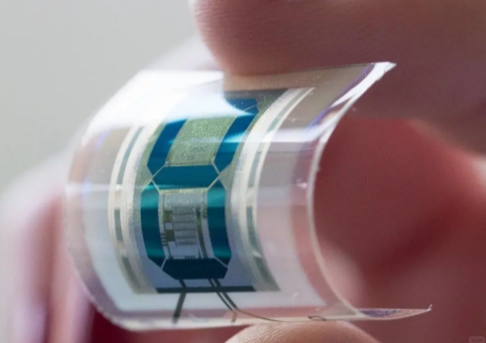
Plant-based material achieves “straw-to-gold” transformation, outperforming traditional plastics
This revolutionary film uses bacterial cellulose – a microbial fermentation product – as the substrate. Through aerosol-assisted synthesis technology, it forms a shell-mimetic “brick-fiber” layered structure with nano-clay sheets. Test data shows its tensile strength reaches 482 MPa, equivalent to 6 times that of commercial polyethylene terephthalate (PET) plastic films, and its modulus is as high as 15 GPa. It also boasts excellent flexibility – it can be folded repeatedly without damage and maintain unobstructed circuit connectivity in bent states. More impressively, it exhibits exceptional environmental adaptability: maintaining stable performance within an extreme temperature range of -40℃ to 250℃, with a coefficient of thermal expansion only 1/50 that of traditional plastics, fully meeting the rigorous requirements of flexible electronic devices.
“The core breakthrough lies in the unification of environmental friendliness and high performance,” explained Academician Yu Shuhong. The film can be completely degraded in soil within 6 months, avoiding microplastic pollution caused by electronic waste. Its carbon emissions during production are only 38.0% of those of petroleum-based materials. In terms of optical properties, it innovatively achieves a combination of 73.0% high transparency and 80.0% high haze, which can significantly improve light utilization efficiency in flexible displays and photovoltaic modules, solving the industry pain point of “transmitting light without diffusing it” in traditional materials.
Hundred-billion-dollar market accelerates landing, sparking substitution revolution across sectors
The technology has quickly paved the way for industrialization. According to Hongxin Electronics, the company has integrated the biomimetic film into its test system for new energy vehicle flexible circuit boards, using it in power battery temperature and voltage monitoring modules. “Adopting the new film reduces battery module weight by 15.0% while solving the recyclability issue of traditional packaging materials,” revealed Liang Kangdi, Deputy General Manager of research and development at Hongxin Electronics. The first batch of new energy vehicles equipped with this material is expected to enter mass production in 2027, reducing carbon emissions by 12 kg per vehicle.
In the consumer electronics sector, a leading brand has launched trials of flexible screen mobile phone casings. Compared with traditional polycarbonate, the new casings offer 40.0% higher drop impact resistance and can be green-recycled through industrial composting. In the healthcare field, flexible biosensors integrated with the film have entered clinical trials. Its biocompatibility and biodegradability provide a new solution for implantable monitoring devices. International data corporation (IDC) predicts that by 2030, over 60.0% of global remote health monitoring devices will adopt such green flexible electronic modules.
Industrial ecosystem reconstructed, China seizes global discourse power
Driven by this technological breakthrough, China’s flexible electronics industry is forming a complete closed loop of “material innovation – device manufacturing – scenario application”. Data shows the global flexible electronics market reached
37 billionin 2024 and is projected to exceed 92 billion by 2030, with the Asia-Pacific region contributing over 40.0% of the growth. China’s first-mover advantage in bio-based materials is transforming into industrial competitiveness – enterprises such as Kaisheng Technology and Rainbow Group have built ultra-thin glass production lines, complementing the biomimetic film; industrial clusters in the Yangtze River Delta and Pearl River Delta are accelerating the layout of “roll-to-roll” mass production processes, with the localization rate of flexible electronic manufacturing equipment expected to reach 75.0% by 2030.
At the policy level, the EU’s New Plastics Strategy requires 30.0% of plastic packaging to contain bio-based materials by 2030, creating opportunities for China’s technology export. “This is not just a material substitution, but a reshaping of industrial rules,” noted an industry analyst. Bio-based flexible electronic technology will drive the green transformation of the automotive, electronics, and medical industries, and its “carbon-negative attribute” can create additional value in the carbon trading market – the scale of related carbon assets is expected to exceed $20 billion by 2030.
From laboratory biomimetic design to hundred-billion-dollar commercial practice, biodegradable flexible electronic technology is using “nature’s wisdom” to resolve the contradiction between technological development and environmental protection. As Academician Yu Shuhong stated: “The high-end manufacturing of the future will ultimately return to green fundamentals.” With the landing of more innovative achievements, the “green era” of flexible electronics has arrived ahead of schedule.